
What to Expect During a Land Survey in Utah: Comprehensive Guide to Process, Costs, and Legal Requirements
Land surveying is a critical process that establishes property boundaries, ensuring clarity and legal compliance for landowners. In Utah, understanding what to expect during a land survey can help property owners navigate the complexities of real estate transactions and land development. This comprehensive guide will cover the essential aspects of the land survey process, including the steps involved, associated costs, and legal requirements. Many individuals may feel overwhelmed by the intricacies of land surveying, but this article aims to demystify the process and provide valuable insights. We will explore the various types of surveys, the timeframes involved, and the specific regulations that govern land surveying in Utah.
Process:
The land survey process in Utah involves several key steps that ensure accurate and reliable results. Understanding these steps can help property owners appreciate the importance of professional land surveying services. The primary components of the process include defining property boundaries, utilizing specialized equipment, and conducting thorough data analysis.
Defining Property Boundaries:

Defining property boundaries is a fundamental aspect of land surveying. Surveyors use various techniques to accurately determine the limits of a property, which is crucial for preventing disputes and ensuring compliance with local regulations. Accurate boundary definition involves the use of historical records, physical markers, and advanced technology to establish clear property lines. This process not only protects the rights of property owners but also facilitates smooth transactions in real estate.
Utilizing Equipment:
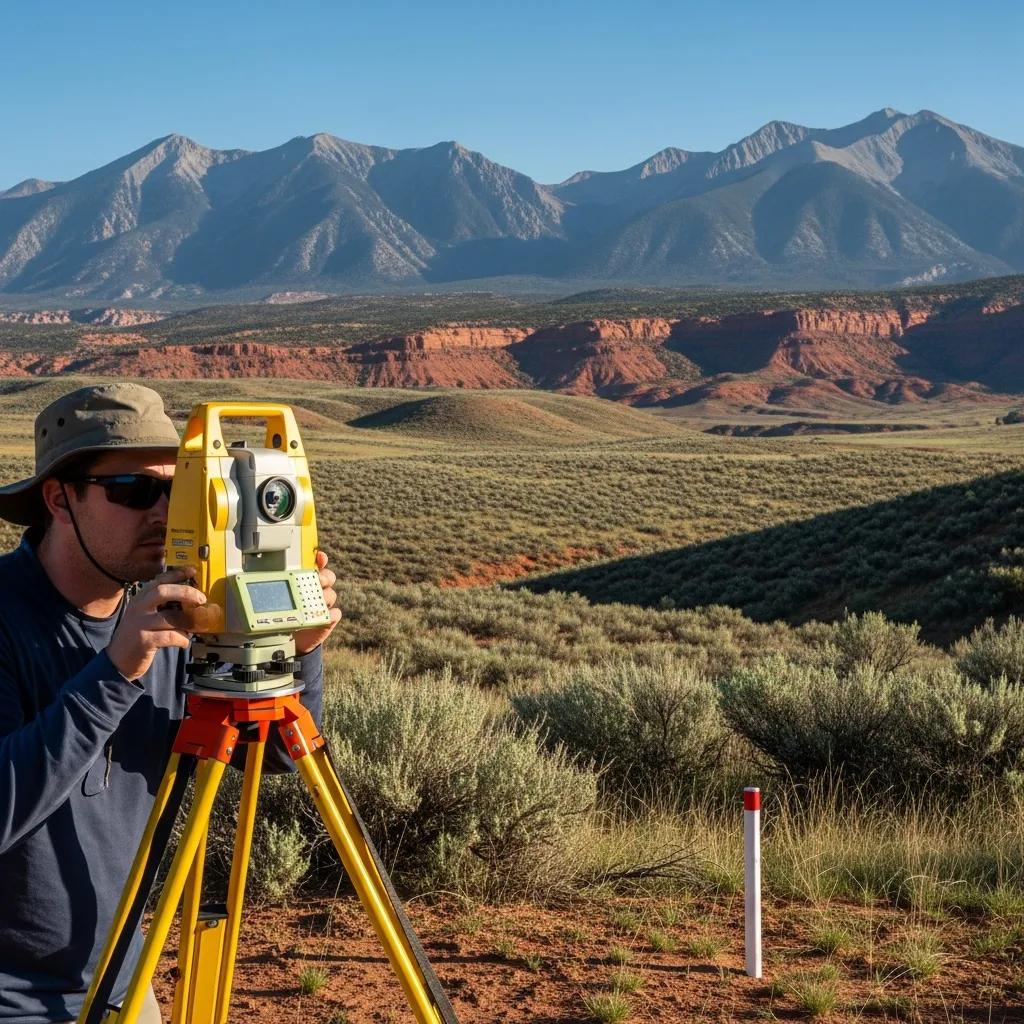
Land surveyors employ a range of specialized equipment to enhance the accuracy of their measurements. Tools such as GPS devices, theodolites, and total stations play a vital role in collecting precise data. These instruments allow surveyors to measure angles, distances, and elevations with remarkable accuracy, ensuring that the survey results are reliable. The use of advanced technology in land surveying significantly reduces the potential for errors, making it an essential part of the surveying process.
The importance of these advanced tools in achieving highly accurate and reliable survey outcomes is further underscored by recent research.
Precision & Trustworthiness in Land Surveying Methods
The results of this study highlight the essential need for using accurate methods in land surveying to improve precision and trustworthiness in different uses.
EVALUATING PRECISION IN LAND SURVEYING: TECHNIQUES AND BEST PRACTICES., 2024
Data Analysis:
Once the data is collected, surveyors analyze the information to create detailed maps and legal descriptions of the property. This analysis involves interpreting the measurements and integrating them into a coherent representation of the land. Accurate data analysis is crucial for producing reliable survey results that can be used in legal documents and property transactions. The final output often includes a survey plat, which visually represents the property boundaries and any relevant features.
Associated Costs:

Understanding the costs associated with land surveys in Utah is essential for property owners planning to undertake this process. Several factors influence the overall cost, including the type of survey, the complexity of the property, and the location.
Boundary surveys typically range from $300 to $1,200 for standard residential lots. More complex surveys, like ALTA surveys, can exceed $2,000 depending on the property specifics. The costs can vary significantly based on the specific requirements of each project, making it important for property owners to obtain detailed estimates from surveying professionals.
Ludlow Engineering is a Utah-based firm specializing in land surveying and civil engineering services. Their primary service related to the topic is professional land surveying, including boundary surveys, topographic surveys, and construction staking.
Legal Requirements:
In Utah, land surveys must adhere to specific legal requirements to ensure compliance with state regulations. Surveyors are required to be licensed professionals, and they must follow established guidelines when conducting surveys. This includes obtaining necessary permits and ensuring that the survey meets local zoning and land use regulations. Understanding these legal requirements is crucial for property owners to avoid potential disputes and ensure that their surveys are valid and enforceable.
How Long Does a Land Survey Take in Utah?
The duration of a land survey in Utah can vary based on several factors, including the type of survey being conducted and the complexity of the property. Generally, a standard residential boundary survey may take anywhere from a few days to a couple of weeks to complete. More complex surveys, such as those involving extensive data collection or legal disputes, may take longer. Factors influencing survey duration include weather conditions, accessibility of the property, and the availability of necessary documentation.
What Are the Types of Land Surveys in Utah?
In Utah, several types of land surveys are commonly conducted, each serving a specific purpose. The most prevalent types include:
- Boundary Surveys: These surveys define the exact boundaries of a property, ensuring that property lines are accurately established.
- Topographic Surveys: These surveys provide detailed information about the terrain, including elevations and natural features, which is essential for land development projects.
- Construction Surveys: These surveys are conducted to ensure that construction projects are built according to the approved plans and specifications.
Each type of survey plays a crucial role in various aspects of land ownership and development, making it essential for property owners to understand their specific needs.
What Are the Land Survey Requirements and Regulations in Utah?
Land surveying in Utah is governed by specific requirements and regulations that ensure the integrity of the process. Surveyors must be licensed by the state, and they are required to adhere to established standards and practices. Additionally, property owners must provide necessary documentation, such as property deeds and previous survey records, to facilitate the surveying process. Compliance with these regulations is essential for ensuring that the survey results are legally valid and can be used in property transactions.
How Much Does a Land Survey Cost in Utah?
The cost of a land survey in Utah can vary widely based on several factors, including the type of survey and the complexity of the property. Here is a breakdown of average prices for different survey types:
- Boundary Survey: $300 – $1,200
- Topographic Survey: $500 – $2,000
- Construction Survey: $600 – $2,500
- ALTA/NSPS Survey: $1,000 – $3,000
These price ranges reflect the typical costs associated with land surveys in Utah, but actual prices may vary based on specific project requirements and the surveying firm chosen.
What Happens During a Land Survey in Utah? Step-by-Step Process
The land survey process involves several key steps that ensure accurate and reliable results. Here is a step-by-step overview of what to expect during a land survey in Utah:
- Initial Consultation: The surveyor meets with the property owner to discuss the project and gather necessary information.
- Research: The surveyor reviews existing property records and legal documents to understand the property’s history and boundaries.
- Field Work: The surveyor conducts on-site measurements using specialized equipment to collect data about the property.
- Data Analysis: The collected data is analyzed to create maps and legal descriptions of the property.
- Final Report: The surveyor prepares a final report, including a survey plat that visually represents the property boundaries.
This structured approach ensures that the survey is conducted efficiently and accurately, providing property owners with reliable information about their land.
Common Questions About Land Surveys in Utah
Land surveys can raise several questions for property owners. Here are some common inquiries:
How to Resolve Property Boundary Disputes
Property boundary disputes can arise when neighboring landowners disagree on the location of property lines. To resolve these disputes, it is essential to consult with a licensed surveyor who can conduct a boundary survey to accurately define the property lines. If disputes persist, legal action may be necessary, involving mediation or court proceedings.
Indeed, the surveyor’s expertise is often the first and most crucial step in addressing such disagreements, sometimes even leading to alternative dispute resolution methods.
US Land Surveyor’s Role in Boundary Disputes & ADR
land surveyor in disputes over land boundaries. Major sources of boundary disputes are Arbitration is commonly referred to as a form of alternative dispute resolution, as is mediation
Boundary Disputes–The US Surveyor’s Role, 2010
Moreover, Utah has established specific statutes and administrative systems to manage and resolve boundary disputes within the state.
Utah Boundary Dispute Statute & Administrative Survey System
compliance with the Utah boundary dispute statute. The Supreme Court of boundary dispute settlement proceedings under an administrative survey system controlled by the state land
Settlement of County Boundary Disputes, 1970
Understanding Survey Markers and Their Importance
Survey markers play a crucial role in land surveying, as they indicate the boundaries of a property. These markers can be physical objects, such as stakes or pins, placed at specific points along the property line. Understanding the significance of these markers is essential for property owners, as they serve as legal evidence of property boundaries and can help prevent disputes in the future.
For more information on professional land surveying services in Utah, consider reaching out to Ludlow Engineering.