1
Quote & Scope
Provide the property and project goal so the surveyor can identify the correct service and quote.


Most straightforward Utah residential boundary surveys take about 1–3 weeks from authorization to delivered survey. Topographic surveys commonly take about 2–3 weeks, while ALTA/NSPS commercial surveys often require 3–5 weeks.
A straightforward residential boundary survey with accessible records, visible or recoverable monuments and normal site conditions can often be completed within one to three weeks. Larger rural parcels, missing monuments, conflicting records, mountain terrain or a complicated boundary can require additional time.
Survey type is one of the strongest predictors of turnaround. A simple residential boundary survey and a commercial ALTA survey require very different amounts of records review, fieldwork and drafting.
| Survey Type | Typical Planning Window | What Usually Takes the Time |
|---|---|---|
| Residential boundary survey | 1–3 weeks | Deed and plat research, monument recovery, field measurement, boundary analysis and drafting |
| Rural / acreage boundary survey | 2–5+ weeks | Larger search area, older descriptions, PLSS research, access and missing monuments |
| Topographic survey | 2–3 weeks | Field collection, elevation processing, surface modeling, contours, drafting and design-ready files |
| ALTA / NSPS survey | 3–5 weeks | Title commitment, exception documents, boundary work, improvements, Table A items and transaction review |
| Construction staking | Project scheduled | Approved plans, project sequencing, stake requests and contractor coordination |
| Subdivision / platting | Project specific | Existing boundary, proposed layout, engineering, municipal review and plat revisions |
| Flood elevation certificate | Often 1–2 weeks | Site access, elevation measurements, FEMA data and certification preparation |
These are planning windows—not guaranteed completion dates. Current workload, parcel complexity and required deliverables can move an individual project outside the typical range.

Because the crew is collecting evidence—not simply producing the final answer in real time. Back in the office, the surveyor must compare the measured information with deeds, plats, previous surveys and monuments; resolve discrepancies; compute the boundary or surface; draft the survey; check the work and prepare the professional deliverable.
A residential boundary project illustrates why survey turnaround is longer than the crew’s time physically spent on the property.
Provide the property and project goal so the surveyor can identify the correct service and quote.
Deeds, recorded plats, prior surveys and corner records are collected and reviewed before or alongside fieldwork.
Survey crews locate monuments, establish control and collect the measurements required for the assignment.
Measurements are processed and compared with the record to identify agreement, discrepancies or missing evidence.
The map or other deliverable is prepared and reviewed under the responsible Professional Land Surveyor.
The final map, files or certifications are issued and required filing is completed where applicable.
Most delays are not caused by measuring technology. They come from the complexity of the property evidence, the site itself or the scope that must be delivered.
Older metes-and-bounds descriptions, multiple parcels, ambiguous descriptions and incomplete records can require substantially more research.
When expected property corners cannot be found, the surveyor may need to search farther away and recover additional controlling evidence.
A deed, subdivision plat, old survey and physical occupation may not fit neatly together. Resolving those conflicts takes professional analysis.
More land generally means a larger search area, more control, additional boundary evidence and more field data to process.
Mountain terrain, dense vegetation, snow, washes and difficult access can reduce the amount of fieldwork completed in a day.
Crews lose time when access was not arranged in advance or when adjoining areas essential to the survey cannot be reached.
Weather does not stop every survey, but snow cover can hide monuments and unsafe conditions can postpone field operations.
Adding topography, utility information, ALTA Table A work or extra property after fieldwork can require a second mobilization.
Commercial ALTA work can stall when the current title commitment, exception documents or Table A selections arrive late.

A clean subdivision lot with recoverable corners can move much faster than acreage where the controlling monument is distant, missing or inconsistent with the record.
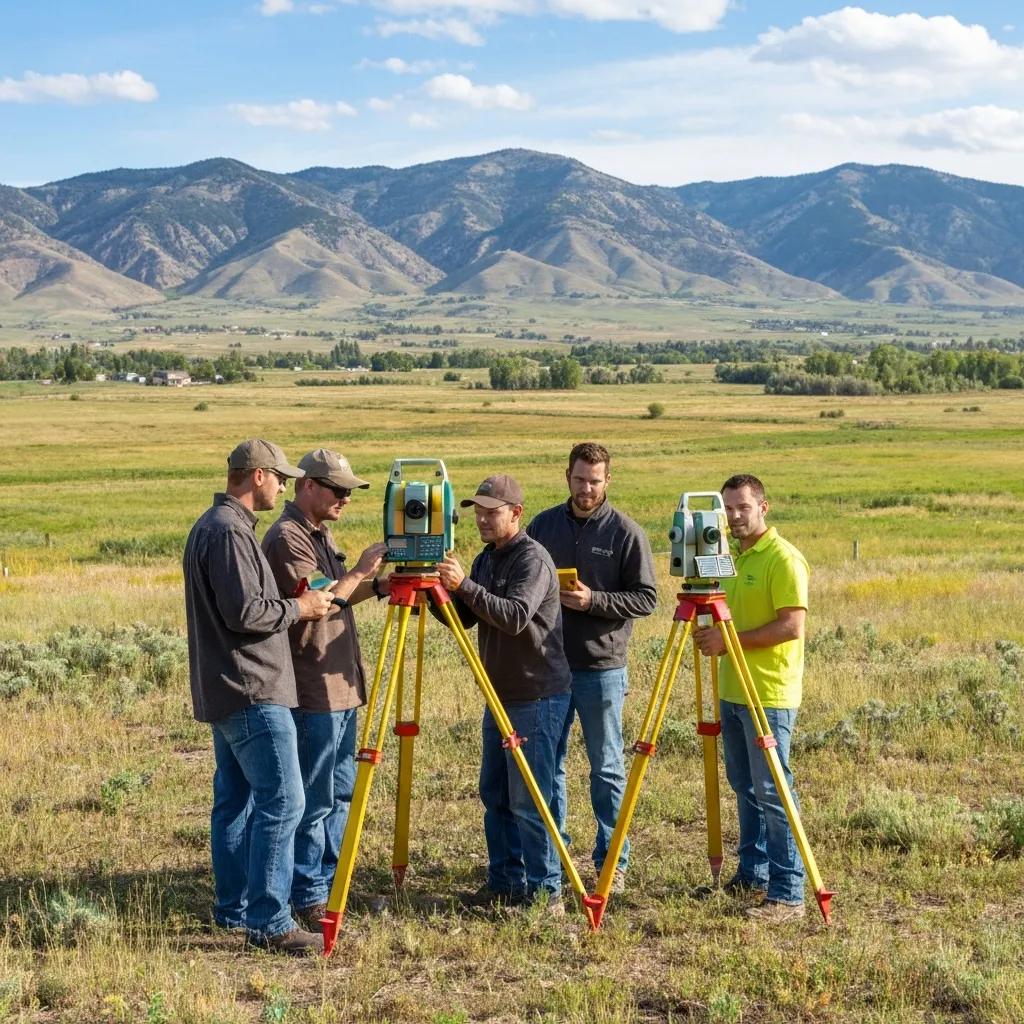
The timeline starts with current workload and mobilization. A survey with an urgent closing date should be discussed before the project is authorized—not after fieldwork is scheduled.

A professional survey is not complete when the crew leaves the property. The field measurements have to be processed and interpreted against the legal and recorded evidence that controls the assignment.
Clients cannot control the condition of old monuments or the complexity of the legal record, but several simple steps can reduce avoidable scheduling delays.
The date the survey is needed is not always the closing date. Lenders, title companies, architects and municipalities often need time to review the survey before the final event.
Order the survey early enough that boundary or title issues can be reviewed before due-diligence periods and closing deadlines expire.
Do not treat the closing date as the survey deadline. The lender, buyer, attorney and title company may need time to review and comment on the draft.
Order the boundary survey before the contractor is scheduled to build along a property line.
Architectural and civil design may depend on the completed boundary or topographic survey, so the survey belongs near the front of the project schedule.
The survey itself is only one phase. Plat preparation, engineering and jurisdictional review can extend the overall development timeline well beyond field surveying.
Contractors should provide adequate notice for stake requests and confirm that the latest approved plan set is available to the surveyor.
You do not need a perfect document package to start. The property and the reason for the survey are enough for the initial conversation.
This page owns survey-turnaround intent. Use the pages below for the specific survey type, pricing or deeper service information.
Compare Utah boundary, topographic, ALTA, staking and other survey services.
1–3 week planning windowProperty corners, boundary evidence, monument recovery and professional survey maps.
2–3 week planning windowContours, elevations and existing-condition mapping for design.
3–5 week planning windowCommercial title surveys requiring records, title coordination and fieldwork.
BudgetCompare current survey prices and understand what affects the fee.
Beginner guideUnderstand records research, field measurement and professional deliverables.
ConstructionPlan stake requests around approved plans and contractor sequencing.
Commercial deadlinesUnderstand Table A and transaction requirements before commercial fieldwork begins.
Your propertyGet a project-specific timeline based on the survey type, property and current workload.
Common timing questions from Utah property owners, buyers, builders, lenders and developers.
A typical residential boundary survey takes about 1–3 weeks from authorization to final delivery. Topographic surveys often take about 2–3 weeks, while ALTA/NSPS commercial surveys commonly take about 3–5 weeks.
A straightforward residential lot can often be measured in roughly 2–4 hours. Larger parcels, missing monuments, difficult terrain or complex improvements can require one or more full field days.
Records research, boundary analysis, computations, drafting, quality control and Professional Land Surveyor review all occur outside the field visit and are part of the professional survey.
Many straightforward Utah residential boundary surveys take approximately 1–3 weeks. Rural acreage and complicated boundaries can take several additional weeks when records or monument evidence are difficult.
A typical residential topographic survey often takes around 2–3 weeks from authorization through design-ready map delivery. Larger commercial or terrain-heavy sites can take longer.
A useful planning range for a standard Utah ALTA/NSPS survey is about 3–5 weeks. Complex title work, optional Table A scope, large sites or transaction revisions can extend that timeline.
Sometimes, depending on crew availability, records, parcel complexity and the required deliverable. Tell Ludlow the actual deadline when requesting the quote so feasibility can be evaluated before scheduling.
Common causes include missing monuments, complicated historic records, conflicting boundary evidence, difficult property access, adverse field conditions, large acreage and late changes to scope.
It can. Surveying continues during much of the Utah winter, but deep snow can hide boundary monuments and unsafe or inaccessible terrain can postpone field operations.
The timing depends on the transaction, but buyers who want a survey during due diligence should order early enough to allow research, fieldwork and review before contractual deadlines expire.
Order it before the fence contractor is scheduled to build. That leaves time to complete the boundary work and address any unexpected property-line issue before construction begins.
Send the property address or parcel number, survey purpose, relevant documents and your actual deadline. Ludlow can then evaluate the parcel and current scheduling rather than relying only on a statewide average.
Send Ludlow Engineering the property address or parcel number, the survey you think you need, what you are trying to accomplish and the date that matters. We will define the scope and give you a project-specific timeline rather than relying on a generic average.