

Fence Property Line Surveys: Avoid Boundary Disputes Before Building
Understanding the importance of a fence property line survey is crucial for homeowners and builders alike. A property line survey defines the legal boundaries of your land, ensuring that any construction, particularly fences, is placed correctly. Without this essential step, you risk boundary disputes with neighbors, which can lead to costly legal battles and unwanted stress. This article will guide you through the significance of property line surveys, the methods to accurately determine your property lines, and the regulations you need to consider before building a fence. We will also discuss how to choose a professional land surveyor and the costs associated with these services.
What Is a Property Line Survey and Why Is It Essential Before Fence Installation?
A property line survey is a detailed examination of a parcel of land to determine its exact boundaries. This process is essential before installing a fence, as it provides a clear understanding of where your property begins and ends. Accurate surveys help prevent disputes with neighbors by establishing legal boundaries that are recognized by law. Failing to conduct a property line survey can lead to encroachments, where a fence is mistakenly built on a neighbor’s land, resulting in potential legal issues and the need for costly adjustments.
How Do Property Boundary Surveys Define Legal Boundaries for Fences?
Property boundary surveys define legal boundaries by utilizing precise measurements and established legal descriptions. Surveyors employ various tools and techniques to mark the corners of a property, ensuring that the boundaries are accurately represented. This process is vital because it not only protects your investment in a fence but also helps maintain good relationships with neighbors by preventing disputes over property lines.
Indeed, the precise definition of property boundaries forms the very foundation of private land ownership and is critical for effective dispute resolution.
Property Boundary Definition & Land Dispute Resolution
This interdisciplinary paper, informed by research and practices in neo-institutional economics, property law and land surveying, is an exploratory account of the boundary as (a) the ontological foundation of private property in land and boundary dispute resolution, and (b) as a pre-contractual condition of any Coasian exchange of rights forplannedurban development andspace-relevantinnovations. Under conditions of positive transaction costs according to the third Coase Theorem, with the help of real-life examples, the paper explains the choice of using the courts, instead of the market, as a means of resolving disputes over land boundaries. It does so in terms of two land surveying and three economic reasons. The surveying reasons are historical and cartographical. The economics reasons relate to the price level of land, the transaction costs of enforcing dispute resolutions and the externalities of land boundary determination.
Performance and accuracy comparisons of GPS and total station in land surveying, E Simsek, 2006
What Are the Key Steps in Conducting a Fence Boundary Survey?
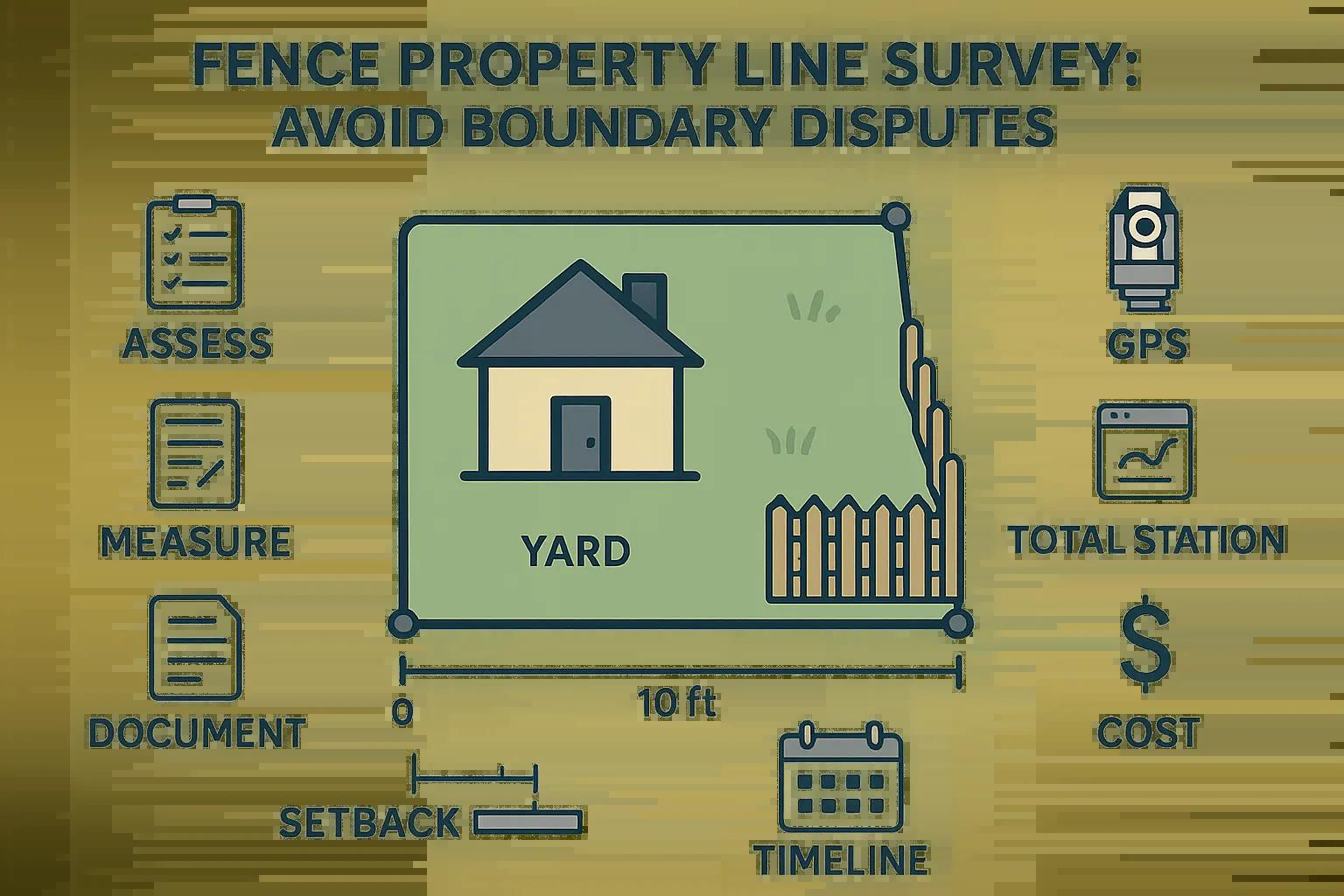
- Initial Assessment: The surveyor evaluates the property and gathers existing documents, such as previous surveys and legal descriptions.
- Measurement Techniques: Using advanced tools like GPS and total stations, the surveyor measures the property lines accurately.
- Final Report Generation: After completing the measurements, the surveyor prepares a detailed report that includes a map of the property lines and any boundary markers.
These steps ensure that the survey is thorough and legally binding, providing peace of mind before any construction begins.
How Can You Find Your Property Lines Accurately Before Building a Fence?
Finding your property lines accurately is essential for any construction project. There are several methods and tools that can assist in this process.
What Tools and Methods Do Land Surveyors Use for Property Line Marking Services?
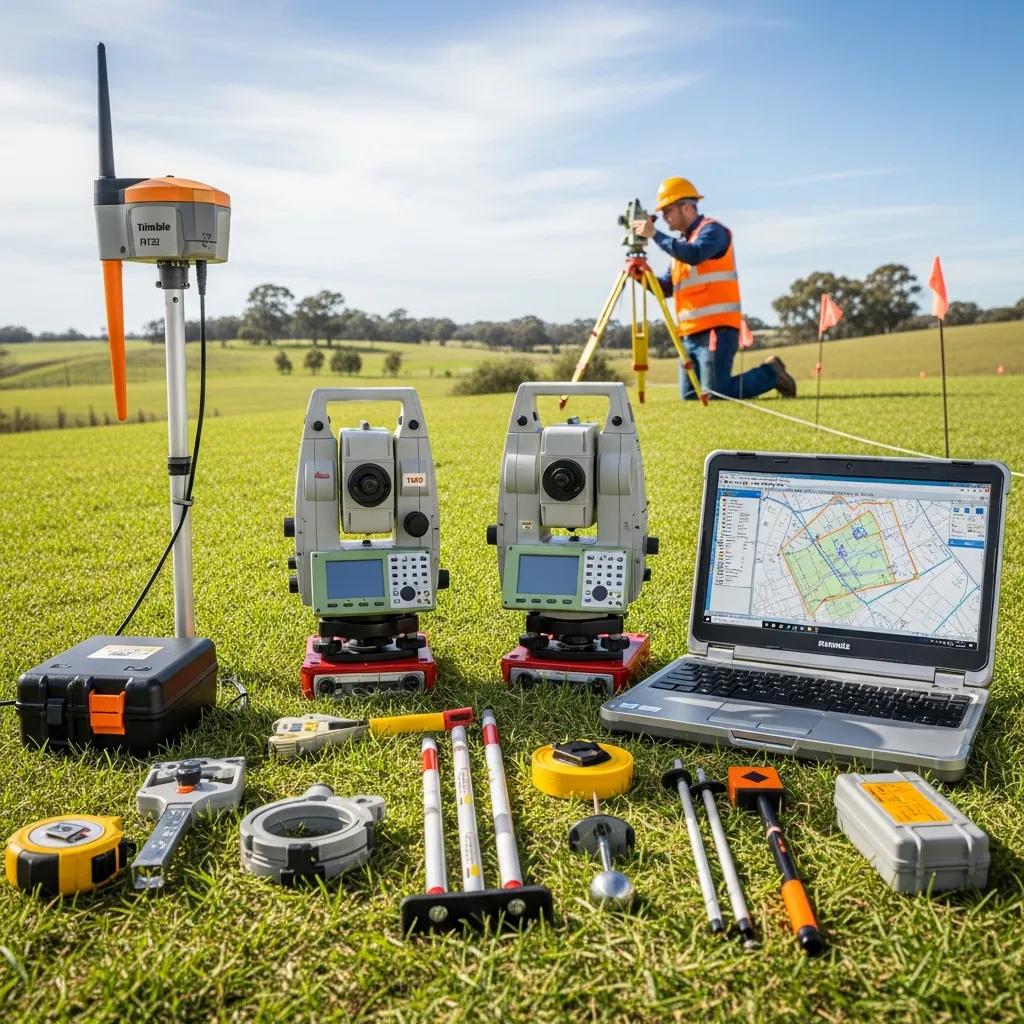
Land surveyors utilize a variety of tools and methods to mark property lines effectively. Common tools include: understanding boundary survey.
- GPS Equipment: Provides precise location data for accurate boundary determination.
- Total Stations: Combines electronic distance measurement and angle measurement for detailed surveys.
- Surveying Software: Helps in creating detailed maps and reports based on the collected data.
These tools enable surveyors to deliver accurate and reliable property line markings.
The precision of these tools is paramount, as research highlights the significant financial implications of inaccurate land surveys.
Land Survey Accuracy: GPS, Total Station & Cost Implications
Accuracies of Real-Time Kinematic Global Positioning (RTK-GPS) system, Total Station (TS) and automatic level were investigated. In the statistical evaluations, Kriging method was used with spherical, exponential, and Gaussian models. The survey results demonstrated that an area of 3.5 ha or smaller can be best explained with Gaussian model, while the larger areas require a spherical model. A vertical error of 60 cm and a horizontal error of 30 can be observed when the survey points outside the construction area are eliminated. The optimum area per survey point was calculated to be 20×20 m2 to increase the accuracy. This case study showed that an inaccurate survey can result over cost estimations up to 27 %.
Performance and accuracy comparisons of GPS and total station in land surveying, E Simsek, 2006
How to Interpret Survey Maps and Boundary Markers for Fence Placement?
Interpreting survey maps and boundary markers is crucial for proper fence placement. Survey maps typically include symbols and notations that indicate property lines, easements, and other important features. Boundary markers, such as stakes or pins, are physical indicators placed at the corners of your property. Understanding these elements ensures that you position your fence correctly, avoiding potential disputes with neighbors.
What Are Fence Setback Regulations and Permit Requirements to Prevent Boundary Disputes?
Before building a fence, it’s important to understand local regulations regarding setbacks and permits. These regulations dictate how far a fence must be from property lines and may vary significantly by location.
How Do Local Fence Regulations Affect Property Line Surveys and Fence Installation?
Local fence regulations can impact property line surveys by requiring specific measurements and documentation. These regulations often dictate the height, materials, and placement of fences, ensuring they comply with community standards. Understanding these regulations is essential for a successful fence installation that adheres to local laws.
What Are Common Fence Setback Distances and Legal Restrictions?
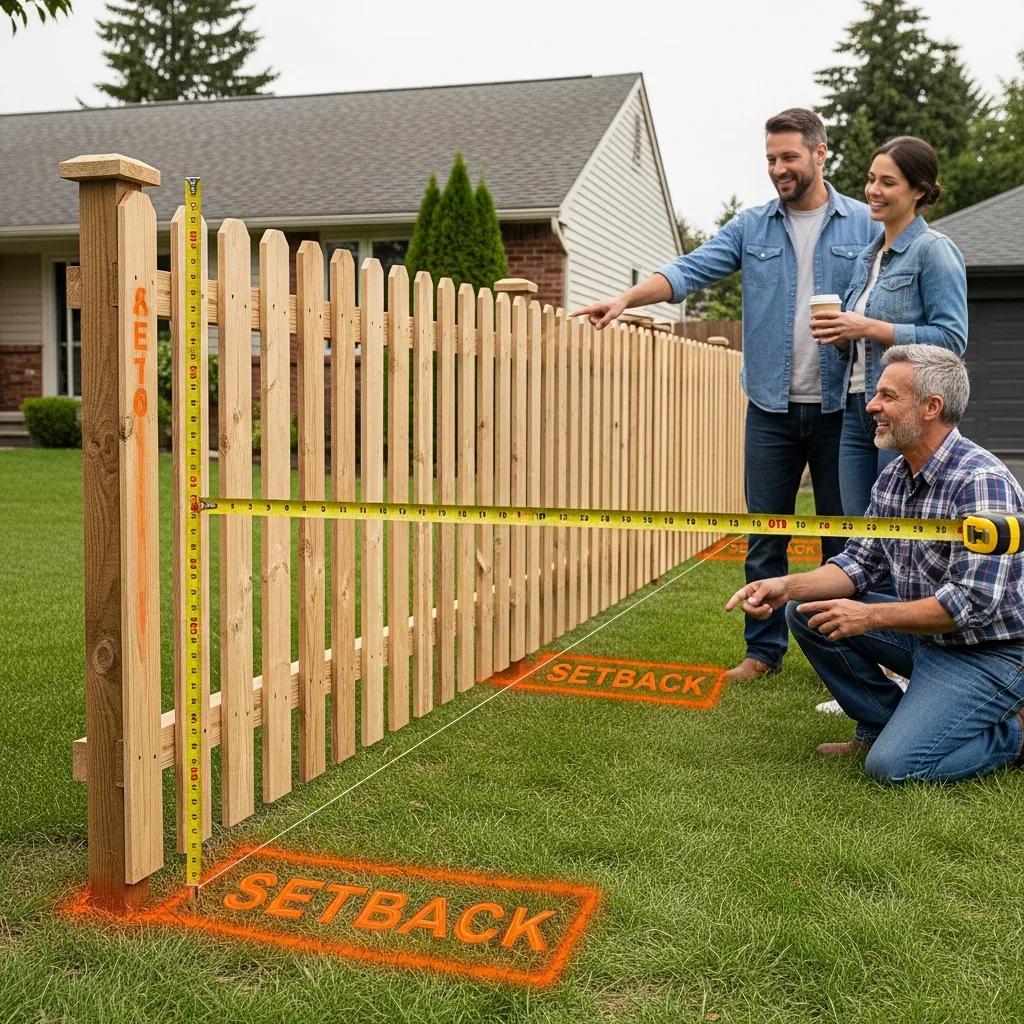
Common fence setback distances typically range from 0 to 10 feet, depending on local laws. Legal restrictions may also include height limits and material specifications. Familiarizing yourself with these requirements can help you avoid fines and ensure your fence is compliant with local ordinances.
How Much Does a Property Boundary Survey Cost and What Factors Influence Pricing?
The cost of a property boundary survey can vary based on several factors, including the size of the property, the complexity of the survey, and the location. On average, property boundary surveys can range from $350 to $1,000.
What Is the Typical Timeline for Completing a Land Survey for Fence Installation?
Typically, a land survey for fence installation can take anywhere from a few days to a few weeks, depending on the property’s size and the surveyor’s workload. It’s essential to plan ahead and allow sufficient time for the survey to be completed before beginning any construction.
Are There Cost-Effective Options for Property Line Survey Services?
For those seeking cost-effective options, some surveyors offer package deals or discounts for multiple services. Additionally, homeowners may consider DIY methods for simple properties, but hiring a professional is recommended for accuracy and legal compliance.
How to Choose a Professional Land Surveyor for Accurate Fence Property Line Surveys?
Choosing the right land surveyor is crucial for ensuring accurate property line surveys. Here are some tips to help you make an informed decision:
- Check Credentials: Ensure the surveyor is licensed and has the necessary certifications to perform property surveys.
- Evaluate Experience: Look for surveyors with a proven track record in boundary surveys and positive customer reviews.
- Assess Service Areas: Confirm that the surveyor operates in your area and is familiar with local regulations.
What Credentials and Licenses Should Licensed Land Surveyors Have?
Licensed land surveyors should possess a state-issued license, which typically requires passing a comprehensive exam and completing a certain number of hours of practical experience. Additionally, certifications from professional organizations can indicate a commitment to ongoing education and industry standards.
How to Evaluate Surveyor Service Areas and Customer Reviews?
When evaluating potential surveyors, consider their service areas and customer reviews. Look for feedback on their reliability, accuracy, and professionalism. Online platforms and local directories can provide valuable insights into a surveyor’s reputation.
How Can You Prevent and Resolve Boundary Disputes Related to Fence Placement?
Preventing boundary disputes is essential for maintaining good neighborly relations. Here are some strategies to consider: boundary survey
What Are Common Causes of Boundary Disputes and How Does Surveying Help?
Common causes of boundary disputes include misunderstandings about property lines, unclear markers, and changes in land use. Conducting a thorough property line survey can help clarify boundaries and prevent disputes by providing a legally recognized document that outlines property lines.
What Legal and Mediation Options Exist for Boundary Dispute Resolution?
If a boundary dispute arises, several legal and mediation options are available. Homeowners can seek mediation to resolve conflicts amicably or pursue legal action if necessary. Consulting with a legal professional experienced in property law can provide guidance on the best course of action.
Mediation, in particular, stands out as an effective non-judicial approach for resolving land surveys amicably.
Mediation for Land Dispute Resolution
The relevance of this topic lies in the fact that land disputes are a widespread phenomenon that can arise in any country or region. The article examines the legal foundations of resolving land disputes using mediation as a non-judicial mechanism for preventing and resolving conflicts through negotiations. It discusses the essence of mediation and its use in land disputes, particularly as an effective tool for achieving mutually beneficial agreements between parties.
Legal foundations for resolving land disputes through mediation as an alternative dispute resolution method, B Derevyanko, 2023
Different factors influence the cost of property boundary surveys, and understanding these can help you budget effectively.
To ensure accuracy and avoid potential legal issues, it’s advisable to consult with professional land surveying services.
Understanding the importance of a fence property line survey is crucial for homeowners and builders alike. A property line survey defines the legal boundaries of your land, ensuring that any construction, particularly fences, is placed correctly. Without this essential step, you risk boundary disputes with neighbors, which can lead to costly legal battles and unwanted stress. This article will guide you through the significance of property line surveys, the methods to accurately determine your property lines, and the regulations you need to consider before building a fence. We will also discuss how to choose a professional land surveyor and the costs associated with these services.
For reliable and precise boundary surveys, consider consulting with experienced professionals.
Frequently Asked Questions
What should I do if I suspect my neighbor has encroached on my property?
If you suspect that your neighbor has encroached on your property, the first step is to review your property line survey and any existing boundary markers. If the survey indicates that your neighbor’s fence or structure is indeed on your land, approach your neighbor to discuss the issue amicably. If a resolution cannot be reached, consider seeking mediation or legal advice to explore your options for resolving the dispute.
How can I ensure my fence complies with local zoning laws?
To ensure your fence complies with local zoning laws, start by checking with your local zoning office or building department. They can provide information on setback requirements, height restrictions, and materials allowed for fences in your area. Additionally, reviewing your property line survey can help you understand where you can legally place your fence. Obtaining the necessary permits before construction is also crucial to avoid fines or required modifications later.
What are the benefits of hiring a professional land surveyor over DIY methods?
Hiring a professional land surveyor offers several advantages over DIY methods. Professionals have the expertise, tools, and knowledge of local regulations to conduct accurate surveys. They can identify potential issues that a layperson might overlook, such as easements or encroachments. Additionally, a professional survey provides a legally binding document that can protect your property rights, whereas DIY methods may lack the necessary legal standing in disputes.
How often should I have my property surveyed?
It is generally advisable to have your property surveyed whenever you make significant changes, such as building a fence, adding structures, or dividing land. Additionally, if you suspect boundary disputes or if there are changes in property lines due to local regulations, a new survey may be warranted. Regular surveys can help maintain clarity about property boundaries and prevent future disputes with neighbors.
What should I look for in a land surveyor’s contract?
When reviewing a land surveyor’s contract, ensure it includes clear details about the scope of work, timeline, and total cost. Look for clauses regarding liability and what happens if the survey is inaccurate. Additionally, check for any guarantees or warranties on the work performed. Understanding the payment structure and any additional fees for revisions or extra services is also crucial to avoid unexpected costs.
Can I use a property line survey for other purposes besides fence installation?
Yes, a property line survey can be used for various purposes beyond fence installation. It is essential for property sales, land development, and construction projects, as it provides a clear understanding of boundaries. Additionally, it can be useful for resolving disputes, applying for permits, and ensuring compliance with zoning laws. Having an accurate survey can also help in planning landscaping or other improvements on your property.
What are the potential consequences of not conducting a property line survey?
Failing to conduct a property line survey can lead to several negative consequences, including boundary disputes with neighbors, legal battles, and costly adjustments to structures like fences. Without a clear understanding of property lines, you may inadvertently encroach on a neighbor’s land, leading to strained relationships and potential litigation. Additionally, not having a survey can complicate property sales and affect your ability to secure permits for future construction.
Conclusion
Conducting a property line survey is essential for homeowners and builders to avoid boundary disputes and ensure accurate fence placement. By understanding legal boundaries, you protect your investment and maintain good relationships with neighbors. Don’t leave your property lines to chance; consult with a professional land surveyor for precise results. Explore our services today to secure your property with confidence.