Ludlow Engineering logo, representing a land surveying company in Utah, associated with land survey cost variations and related services.

Drone ALTA Survey in Utah

Drone-Powered ALTA · Utah

Drone ALTA Survey in Utah

UAV-led ALTA/NSPS Land Title Surveys that compress three days of field work into one. Centimeter-accurate orthomosaics, full 3D site capture, fully compliant with the 2026 ALTA/NSPS standard. From $3,000.

FAA Part 107 Certified UAV Crews 2026 ALTA/NSPS Compliant 1 Day Field Work vs. 3 (435) 623-0897

Home Our Services ALTA Surveys Drone ALTA Survey

Updated May 2026 · By the Ludlow Engineering team

A drone ALTA survey is an ALTA/NSPS Land Title Survey produced primarily with UAV photogrammetry rather than traditional ground-based methods. The deliverable is identical — a signed, stamped, fully compliant ALTA/NSPS survey that satisfies your lender, title insurer, and title company. What changes is how we get there: a single flight captures the entire property as a centimeter-accurate orthomosaic and 3D point cloud, our ground crew verifies control points and documents items the drone can’t see, and you receive a richer survey package in 3–4 weeks instead of 5–6. Ludlow Engineering has been performing commercial surveys in Utah since 1975 and operates an FAA Part 107 certified UAV program. Pricing starts at $3,000; call (435) 623-0897 or request a quote online.

The short version

A drone-led ALTA survey produces the same legally compliant document as a traditional ALTA survey — but the field work takes one day instead of three, the entire site gets mapped at centimeter accuracy rather than just sampled at measured points, and the orthomosaic deliverable is directly usable by your downstream architect, civil engineer, and contractor. It’s the right answer for almost every Utah commercial parcel under 100 acres.

1 dayField Work on Site
±0.05 ftRelative Precision
3-4 wksTotal Delivery
$3,000+Starting Price

What a Drone ALTA Survey Is (and Isn’t)

A drone ALTA survey isn’t a separate product or a lesser version of a traditional ALTA — it’s the same ALTA/NSPS Land Title Survey, performed to the same accuracy standards, signed and sealed by the same Utah-licensed Professional Land Surveyor. The methodology differs but the deliverable does not. Your title company will accept it. Your lender will accept it. The title insurer will write coverage against it.

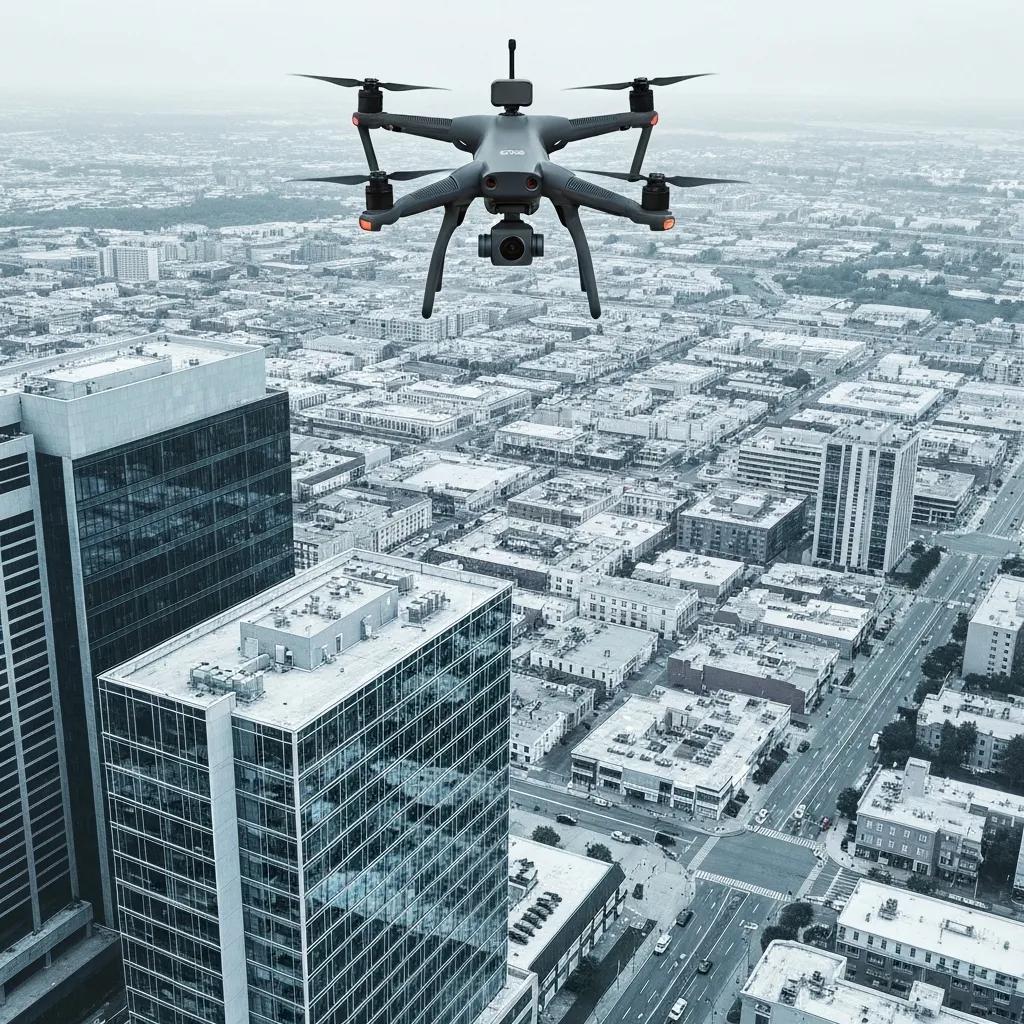
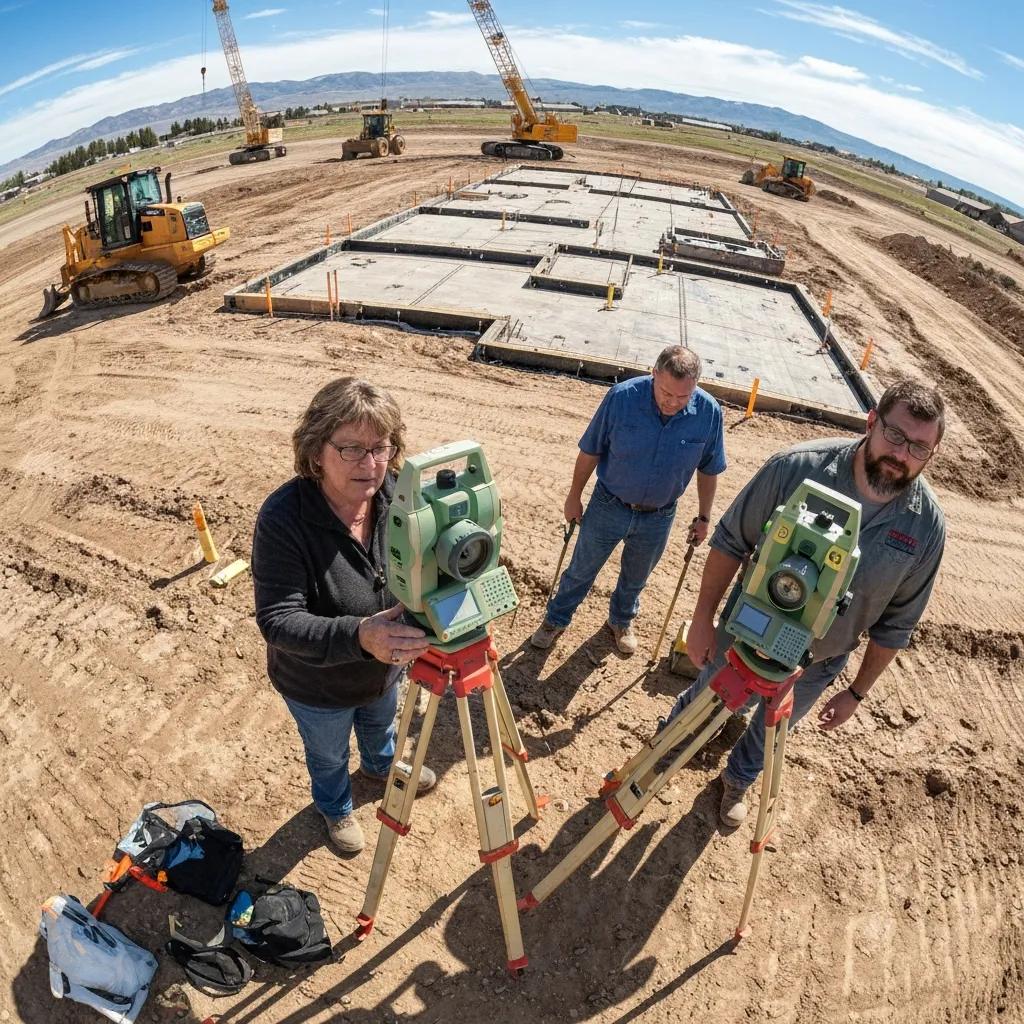
What’s different is the data capture. A traditional ALTA crew arrives at a 5-acre commercial parcel with a GPS rover and total station and spends two or three days walking the site — locating monuments, measuring building corners, tracing fences, sketching utility evidence, sampling spot elevations. A UAV-led ALTA crew arrives with the same total station and GPS rover plus a survey-grade drone. The drone is in the air for 20–40 minutes per flight; while it’s mapping the site, the ground crew handles the verification work the drone can’t do — recovering existing monuments, documenting underground utility evidence, capturing items beneath roof overhangs and tree canopy.

The output is a 4K or higher-resolution orthomosaic of the entire property, a dense 3D point cloud that captures every elevation and structure, and the same boundary determination and Table A documentation a traditional ALTA produces. It comes together in three to four weeks instead of five or six. And because the data is comprehensive rather than sampled, scope changes mid-project rarely require a return field trip — most “can you also add…” questions from the title company can be answered from existing flight data.

Is it legal? Yes.

The ALTA/NSPS standards specify accuracy thresholds and deliverable content — not methodology. The 2026 ALTA/NSPS Minimum Standard Detail Requirements explicitly accommodate aerial imagery (Table A Item 15) and require only that the surveyor agree with the client in writing on imagery source, discuss accuracy implications, and place a face-of-plat note explaining the imagery’s qualifications. Every drone ALTA we deliver meets those requirements, is signed and stamped by a Utah-licensed PLS, and is accepted by every major national title insurer.

◆ ◆ ◆

Why UAV-Led ALTA Wins on Commercial Sites

The case for drone ALTA survey on Utah commercial property comes down to six concrete advantages.

01

One-Day Field Work

A 5-acre commercial parcel that takes a traditional crew two or three days takes a UAV crew one day on site. For commercial transactions where carrying cost, closing pressure, and tenant occupancy schedules all matter, that compression is real money.

02

Continuous Site Coverage

Traditional methods measure specific points and interpolate between them. UAV photogrammetry captures the entire site at centimeter accuracy. Every parking stall, every drainage swale, every rooftop appurtenance gets documented — not just the items on the Table A list.

03

Higher Accuracy on Topo

Table A Item 5 (vertical relief) on a traditional survey gets sampled at requested contour intervals. On a UAV survey it comes from a dense 3D point cloud — typically 50 to 200 points per square meter. Grading contractors and civil engineers can build directly from it.

04

Reusable Orthomosaic

The drone-captured orthomosaic isn’t trapped inside the ALTA deliverable. We provide it as a separate file you can hand to your architect, civil engineer, leasing team, or marketing department. Effectively a free aerial that would have cost $1,500–$3,500 on its own.

05

Lower Safety Risk

Industrial sites, active construction zones, properties with heavy traffic, parcels with steep slopes or unstable footing — all of these get safer when the drone covers the dangerous areas and the ground crew focuses on lower-risk verification work.

06

Scope Changes Without Site Returns

Title company asks for an additional measurement two weeks after the field visit? On a traditional survey, that’s another field trip. On a UAV survey, the data was likely captured the first time — we go back to the orthomosaic and the point cloud instead of back to the site.

◆ ◆ ◆

When Traditional Ground Survey Is the Better Answer

UAV-led ALTA isn’t right for every site, and we’ll tell you up front when it isn’t. The three scenarios where ground-based methods still win:

  • Dense urban infill — downtown Salt Lake City, urban Provo blocks, anywhere line-of-sight from above is blocked by surrounding tall buildings, overhead utilities, or signage. The drone’s value drops sharply when half the site is shadow or obstruction.
  • Properties under heavy canopy — wooded commercial parcels where the boundary corners, monuments, and improvements are all under tree cover. A UAV can map what’s visible from above; ground methods may be more efficient where the ground is what’s needed.
  • Strict client methodology requirements — a small subset of institutional clients, government agencies, or specific lender programs require ground-only methodology. Where that’s the case we use traditional methods and disclose pricing accordingly.

The good news: well over 90% of Utah commercial parcels — retail, office, industrial, multi-family, mixed-use, hospitality, vacant development land — fall into the “UAV wins” category. When you submit a quote request through our Table A intake form, we evaluate the parcel during scoping and tell you which approach is right before quoting.

UAV-Led vs. Traditional ALTA: The Detailed Comparison

Aspect Traditional Ground UAV-Led (Ludlow)
Field time, 5-acre site 2–3 days 1 day
Field time, 20-acre site 4–6 days 1.5–2 days
Total project timeline 4–6 weeks 3–4 weeks
Relative Positional Precision ±0.05 ft at measured points ±0.05 ft with ground control
Topo Table A coverage Spot elevations at requested intervals Dense 3D point cloud, full site
Building documentation Manual facade and rooftop measurement Full-resolution aerial of every roof
Parking count (Table A 9) Walked and tallied Counted from orthomosaic, verified on site
Imagery deliverable (Table A 15) Negotiated separately if at all Standard — included orthomosaic
Re-survey for scope changes Return crew to site Often answerable from flight data
Site safety on industrial Crew on foot Risky zones covered from air
Downstream design utility 2D plat only 2D plat + orthomosaic + point cloud
◆ ◆ ◆

Our Drone ALTA Survey Process

Every UAV-led ALTA survey at Ludlow Engineering follows the same five-phase process. Timeline typically runs 3–4 weeks depending on parcel complexity, weather, and title company review speed.

1

Scoping & Table A Selection

We review the title commitment, lender requirements, and title insurer’s preferences. From that we build the Table A list, evaluate the site for UAV viability, and confirm pricing.

2–5 business days
2

Records Research

Recorded deeds, plats, easements of record, adjoining parcel deeds, prior surveys, and Schedule B title exceptions are pulled and analyzed. The PLS reviews the boundary evidence before any field work begins.

1–2 weeks
3

UAV Flight & Ground Verification

Our crew sets ground control points with GPS, flies the UAV mission (typically 20–40 minutes per flight on commercial parcels), then verifies improvements, recovers existing monuments, and documents items the drone can’t see — underground utility evidence, interior features, items under canopy or overhangs.

1 day on site
4

Photogrammetric Processing & Drafting

UAV imagery is processed into a centimeter-accurate orthomosaic and dense 3D point cloud, georeferenced to the control network. The drafter compiles the orthomosaic, field verification, records research, and Table A documentation into the final ALTA plat. The licensed PLS reviews and stamps the survey.

1–2 weeks
5

Title Review & Final Delivery

Signed survey goes to the title company for review against the title commitment. Revisions are made as needed. Final delivery includes the stamped ALTA plat, the orthomosaic file, and a digital point cloud — all delivered by email and uploaded to your title company’s portal.

1 week

The UAV Equipment and Methodology

Ludlow Engineering operates a fleet of survey-grade UAVs. The platform varies by project — a multi-rotor RTK drone is best for tight commercial parcels with vertical features, while a fixed-wing platform covers large rural acreage more efficiently. Every flight follows FAA Part 107 regulations and a written flight plan filed with our internal safety officer before takeoff.

Accuracy comes from three integrated systems:

  • RTK/PPK GPS on the aircraft — real-time or post-processed kinematic GPS provides survey-grade position data on every captured image, eliminating the need for dense ground control on most sites.
  • Ground control points — placed and shot by the ground crew using GPS rovers tied to the National Spatial Reference System. These anchor the photogrammetric model to the established coordinate datum and verify accuracy.
  • Photogrammetric processing — proprietary software builds the orthomosaic and point cloud from the captured imagery, with rigorous quality control on residuals, point density, and accuracy validation against control.

The combined system produces deliverables that meet or exceed the ALTA/NSPS Relative Positional Precision standard of 2 cm + 50 ppm at the 95% confidence level. We document the accuracy validation in every survey report.

◆ ◆ ◆

Drone ALTA Survey Pricing in Utah

Pricing for a UAV-led ALTA survey at Ludlow Engineering is the same or slightly lower than traditional ground-based ALTA pricing — the field-time savings offset the equipment and processing costs, and on larger parcels UAV is meaningfully cheaper.

Project Type Typical Scope Typical Price
Small commercial parcel Under 2 acres, single building, basic Table A $3,000 – $5,500
Medium commercial parcel 2–10 acres, multiple buildings, standard Table A $5,000 – $9,500
Large commercial parcel 10–40 acres, complex improvements $8,000 – $15,000
Industrial / multi-tenant Complex easements, utility documentation $6,000 – $20,000
Multi-parcel portfolio Multiple parcels, integrated survey Quoted on scope
Extended Table A items Beyond standard 8–10 items + $1,000 – $4,000
Rush turnaround Expedited delivery in 2–3 weeks + 20–35%

For a deeper cost breakdown including Table A item-by-item pricing, see our ALTA Survey Cost in Utah guide. All quotes are fixed-fee in writing, with scope of work and confirmed Table A list attached.

Counties & Cities We Serve

Our UAV-equipped ALTA crews work across Utah’s commercial corridors. Drone-led surveys are particularly well-suited to suburban and rural commercial parcels:

We also work in Davis, Weber, Wasatch, Carbon, Iron, Washington, Juab, and Millard counties. For commercial properties anywhere in Utah, call (435) 623-0897.

Frequently Asked Questions

Is a drone-based ALTA survey accepted by title insurance companies?

Yes. The ALTA/NSPS standards specify accuracy requirements and deliverable content — not methodology. UAV photogrammetry that meets the same accuracy specifications produces a fully compliant ALTA survey. Every major national title insurer accepts UAV-derived ALTA surveys as long as they’re signed and stamped by a licensed PLS, which ours always are. Our drone flights also follow FAA Part 107 regulations on every mission.

How is the accuracy controlled on a UAV ALTA?

Three integrated systems: RTK/PPK GPS on the aircraft provides survey-grade position on every captured image, ground control points placed and shot by our ground crew anchor the photogrammetric model to the established coordinate datum, and photogrammetric processing software builds the orthomosaic with rigorous QC on residuals and accuracy. The combined system meets or exceeds the ALTA/NSPS Relative Positional Precision standard of 2 cm + 50 ppm at the 95% confidence level. We document validation in every survey.

Will the drone capture everything I need for Table A items?

Most items, yes — and often better than ground methods. Buildings, parking, vertical relief, substantial features, gross land area, distance to intersecting streets, and address are all captured from the air. Items requiring ground verification — monuments (Table A 1), underground utilities (Item 11), party walls (Item 10), zoning items requiring an actual letter (Item 6) — are handled by our ground crew during the same site visit. The result is one site visit that captures everything.

Is drone-based ALTA more expensive than traditional ALTA?

No, it’s usually the same or slightly less. The field-time savings offset the UAV equipment and processing costs. On larger parcels (10+ acres) UAV is typically meaningfully cheaper because field time scales linearly with parcel size on a traditional crew but only modestly on a UAV crew. The orthomosaic deliverable is also effectively free with the UAV approach — a separate aerial would have cost $1,500–$3,500.

How long does a drone ALTA survey take?

Most UAV-led ALTA surveys take 3–4 weeks from contract to delivered final survey. Records research is typically 1–2 weeks, UAV flight and ground verification take a single day on site, photogrammetric processing and drafting take 1–2 weeks, and title company review adds another week. Traditional ground-only ALTA surveys typically take 4–6 weeks on the same parcel.

What if my site isn’t a good fit for drone surveying?

We tell you up front. Dense urban infill with overhead obstructions, parcels under heavy tree canopy, and projects with client-imposed ground-only requirements are the three scenarios where traditional methods win. We evaluate every site during scoping and recommend the right approach before quoting. Over 90% of Utah commercial parcels are good UAV candidates.

Are your drone pilots licensed?

Yes. Every Ludlow Engineering UAV pilot holds an active FAA Part 107 Remote Pilot Certificate. We follow Part 107 regulations on every flight including controlled airspace authorization, daylight operations, visual line of sight, altitude limits, and pre-flight safety checks. Insurance coverage on our UAV operations matches our standard professional liability coverage.

What is the orthomosaic and what can I do with it?

The orthomosaic is a geographically accurate aerial photograph of your entire property, stitched together from the drone’s imagery and corrected for distortion. Unlike a regular aerial photo, every pixel is georeferenced — you can measure distances and areas on it directly. It’s deliverable as a high-resolution GeoTIFF that your architect, civil engineer, contractor, or marketing team can use in their own software. Effectively a free aerial that would have cost $1,500–$3,500 commissioned separately.

What about underground utilities — can a drone see those?

No, and neither can a ground crew. Underground utility documentation (Table A Item 11) is always a combination of (a) client-provided plans and utility company records, (b) coordinated 811 utility locate markings, and (c) surveyor observation of surface indicators — manholes, valves, vent pipes, locate markings. The 2026 ALTA/NSPS standard explicitly requires a note explaining the limits of underground utility documentation. Our process for Item 11 is the same on a drone ALTA as on a traditional ALTA — coordinated, documented, and noted on the face of the plat.

Can the UAV data be used for other engineering or design work?

Yes — and this is one of the biggest advantages of UAV-led surveying. The orthomosaic and 3D point cloud are deliverable as separate files. Your civil engineer can build grading plans directly from the point cloud. Your architect can sketch site additions over the orthomosaic. Your contractor can take measurements off it. Your marketing team can use it for property listings. None of those use cases is possible from a traditional ALTA’s 2D plat alone.

Do you offer drone surveying outside of ALTA work?

Yes. The same UAV equipment and crews handle topographic surveys, construction progress documentation, agricultural acreage measurement, and pre-development site mapping. See our UAV aerial surveying page for the broader service offering.

Ready for a Drone-Powered ALTA Survey?

Call (435) 623-0897 or submit our Table A intake form — we’ll evaluate UAV viability for your site, coordinate Table A scope with your title company, and send a fixed-fee proposal within 1–2 business days.

Request a Quote Call (435) 623-0897