Ludlow Engineering logo, representing a land surveying company in Utah, associated with land survey cost variations and related services.

Land Surveyors In Fountain Green Utah

Land Surveyors In Fountain Green Utah
Master Land Surveying in Fountain Green

boundary survey

Master Land Surveying in Fountain Green

Surveying in Fountain Green, Utah creates the legal and physical baseline for property ownership, development, and dispute resolution. In plain terms: surveyors measure, map, and document land features and boundaries so owners, planners, and builders can move forward with confidence. This guide walks through the main survey types—property, boundary, and topographic—and shows how licensed surveyors turn deed research, field measurements, and geospatial tools into plats, legal descriptions, and CAD/GIS deliverables used for real estate, permitting, and construction. Many property owners aren’t sure where lines fall, what permits require, or which deliverables they should ask for; accurate surveys reduce that uncertainty by producing defensible records and coordinating with title companies, county recorders, and civil engineers. Read on for what to expect from common surveys, how topographic mapping is done with RTK GPS and total stations, the cost drivers that affect estimates, and practical steps to choose and verify a licensed land surveyor in the Fountain Green area. You’ll also find service details, typical turnaround times, hiring checklists, timing cues for ordering a survey, and the field challenges surveyors commonly solve here.

What services do licensed land surveyors in Fountain Green, Utah provide?

Licensed land surveyors in Fountain Green deliver the records and control points that projects and transactions rely on. Using deed research, monument recovery, and on-site measurement, surveyors document parcel lines, map existing conditions, and establish horizontal and vertical control for design and construction. Common outcomes are plats, sealed drawings, legal descriptions, and digital files (DWG, DXF, or GIS) that integrate with civil engineering and permitting workflows. Surveyors connect property owners, title companies, county recorders, and engineers by translating historical records and monuments into precise coordinates and accepted survey documents. Knowing the typical deliverables and turnaround for each survey type helps you request the right scope and budget accurately.

Core services typically include:

  • Property Survey: Research and fieldwork to locate parcel corners and produce a sealed survey plat.
  • Boundary Survey: Corner retracement, monument marking or restoration, and an encroachment assessment with a sealed boundary map.
  • Topographic Survey: Elevation and surface-feature mapping for contours, grading, and site design.
  • ALTA / Title Survey: A detailed survey prepared to meet title company and lender specifications for commercial transactions.
  • Construction Staking: Transfer of design points to the ground so contractors build to the plans.

These core services are commonly paired with plats, written boundary descriptions, field notes, and coordinate files that make handoff to engineers and permitting authorities seamless. The next section explains how a property survey in Fountain Green establishes legal boundaries using deeds, monuments, and measurement control.

How does a property survey in Fountain Green, Utah define your land?

A property survey combines title research with field verification of monuments and measured distances to establish a legal boundary that corresponds to deed descriptions. Surveyors start by reviewing deeds and county records to extract bearings, distances, and historical monument locations. Field crews then locate surviving monuments and measure boundary lines with a total station or GNSS receiver. Deliverables usually include a sealed survey plat showing bearings, distances, monuments, and a written legal description ready for recording or use by title companies. The result is a defensible, evidence-based description of your parcel that helps resolve disputes, supports transactions, and informs future development.

What is included in a boundary survey in Fountain Green, Utah?

A boundary survey in Fountain Green typically includes corner locating, monument restoration or marking, an encroachment and easement review, and a sealed plat or map with a written boundary description that clarifies legal limits. Surveyors document fences, buildings, and visible encroachments, and when monuments are missing they research historical records and use coordinate control and best‑fit analysis to reconcile discrepancies. Deliverables commonly include a sealed boundary plat, field notes, and recommendations when title ambiguities or encroachments surface. If conflicts can’t be resolved technically, the surveyor may suggest title or legal follow-up. Asking for a clear checklist of inclusions—monument recovery, recorded easement mapping, and a sealed plat—helps ensure the survey meets your transaction or dispute-resolution needs.

Below is a quick summary of typical services, standard deliverables, and expected turnaround to help you compare options and plan scheduling.

ServiceIncluded DeliverablesTypical Turnaround
Property SurveySealed plat, legal description, field notes, monument verification1–3 weeks depending on research complexity
Boundary SurveySealed boundary map, encroachment report, monuments set/marked2–4 weeks with possible extensions if records are missing
Topographic SurveyContours, feature points, elevation data, CAD/GIS files1–2 weeks for small sites; longer for complex terrain
ALTA/Title SurveyALTA plat, title-related items annotated, lender-specific notes2–6 weeks depending on title commitment items
Construction StakingStaked control points, staking report, existing conditions checkTypically 1 week after final plans and control are established

This table sets realistic expectations for scope and timing when you request quotes. Ready to move forward? Request a quote or consultation through our website to discuss scope, deliverables, and scheduling.

How are topographic surveys conducted by land surveyors in Fountain Green, Utah?

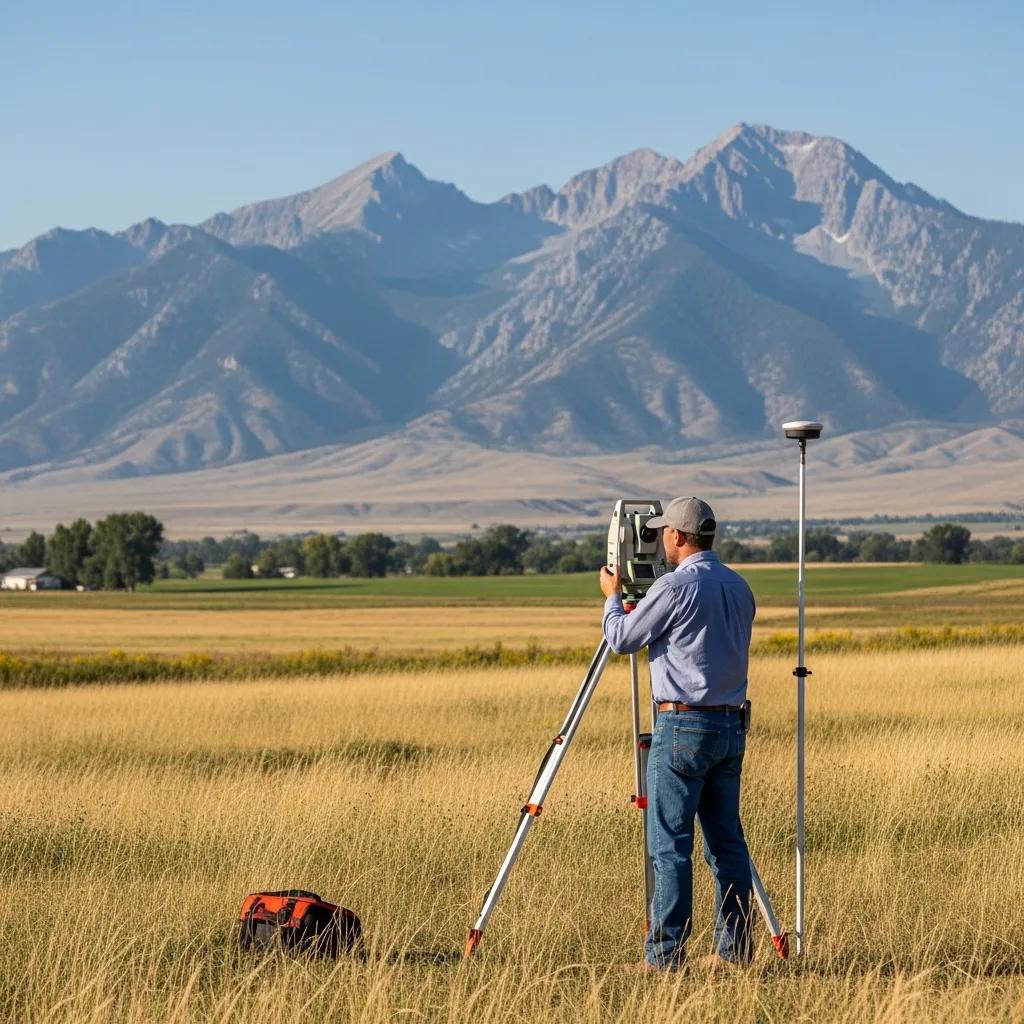
Topographic surveys map elevations and surface features by establishing control points, collecting precise field measurements, and processing data into contours and digital elevation models used for grading, drainage, and site design. Surveyors perform a site reconnaissance to locate natural and man-made features, then establish horizontal and vertical control using RTK GPS or total stations tied to benchmarks to keep survey points consistent. Field collection pairs ground measurements with remote sensing—drones or terrestrial LiDAR when vegetation or steep slopes make walking impractical—and processing converts point clouds and shots into contours, DEMs, and CAD deliverables. These outputs support engineers and permitting authorities by providing accurate surface models and feature inventories for design and approvals.

Topographic data is integral to design and permitting workflows and helps coordinate utilities and grading to avoid drainage problems. The next subsection explains why topo surveys matter for Fountain Green properties, where slope, irrigation, and local drainage patterns drive design choices.

Why are topographic surveys important for Fountain Green, Utah properties?

Topographic surveys matter in Fountain Green because they show slopes, drainage paths, and existing infrastructure—information that’s critical for septic systems, grading plans, and foundation siting on variable terrain. Accurate contours and feature mapping reduce the risk of water pooling, setback conflicts, and permit delays by illustrating how surface water moves and where cut‑and‑fill balances are needed. On small residential sites, topo data informs safe building placement and setback compliance; on larger developments, it feeds civil models to size drainage structures and route utilities. Having current topographic information early in design prevents costly redesigns and speeds permit approvals.

What tools and techniques do surveyors use for topographic mapping?

Surveyors combine GNSS/RTK for control, total stations for precise angles and distances, aerial drones for broad surface detail, and LiDAR for dense point clouds to produce reliable topographic maps and contours. The equipment choice balances speed and accuracy: drone photogrammetry and LiDAR capture large or vegetated areas quickly, while total stations and RTK provide the verification and control needed for construction‑grade tolerances. Data is processed in CAD and GIS software to produce DWG/DXF files, DEMs, and contour lines at client‑specified intervals. Understanding these trade‑offs helps you pick the most efficient method for your site and project scale.

RTK‑GPS and Total Station Accuracy in Land Surveying

Studies comparing RTK‑GPS and total station performance in a GIS environment used geostatistical methods (Kriging) with spherical, exponential, and Gaussian models. Results suggested areas up to roughly 3.5 ha are best modeled with a Gaussian fit, while larger areas favor a spherical model. Vertical errors near 60 cm and horizontal errors near 30 cm were observed when survey points outside the construction area were excluded. An optimal survey point spacing of about 20×20 m improved accuracy. The case study also showed that inaccurate surveys can lead to cost overestimates of up to 27%.

Source: Evaluation of RTK‑GPS and Total Station for applications in land surveying, U. Kizil, 2011

What factors influence land survey costs in Fountain Green, Utah?

Survey cost depends on several primary factors: the survey type, property size and complexity, site access and terrain, depth of record research, and the specificity of deliverables (for example, ALTA certifications or CAD files). Each element affects field time, research time, and post‑processing: larger acreage increases walking and data capture time; dense vegetation or steep slopes slow crews and may require drone or LiDAR support; and complicated deed histories require more office research. Permit coordination, third‑party utility locates, or easement mapping can add time and expense, and expedited schedules typically cost more. Requesting multiple itemized quotes helps you compare true value rather than just price.

Key cost drivers to consider when budgeting and preparing questions for proposals:

  • Survey Type & Deliverables: Complex outputs like ALTA surveys cost more than a basic property sketch.
  • Parcel Size & Terrain: Acreage, slope, and vegetation directly affect field time and equipment needs.
  • Title & Record Research: Missing monuments or tangled deed chains increase office research time.
  • Access & Permissions: Gated or remote properties and required permits raise logistics and costs.
  • Turnaround & Coordination Needs: Rush jobs or utility coordination add fees.

These drivers explain why unusually low quotes often omit required work—ask for a detailed scope that lists tasks and deliverables. The table below compares common survey types by scope and cost influencers to help you evaluate proposals.

Survey TypeTypical ScopeCost Influencers
Property SurveyBoundary research, monument recovery, sealed platParcel area, record complexity, monument condition
Boundary SurveyCorner retracement, encroachment report, easement reviewNeighboring improvements, title ambiguities, litigation risk
Topographic SurveyContours, feature mapping, DEM/CAD filesVegetation density, slope, required contour interval
ALTA/Title SurveyTitle item annotation, lender specifications metTitle commitment conditions, lender requirements
Construction StakingLayout of building corners and grade linesPlan revisions, site accessibility, staking frequency

If you’d like a site‑specific estimate for your Fountain Green property, request a quote or consultation through our website and we’ll review the factors that affect schedule and price.

How do property size and survey type affect surveying costs?

Property size and survey type directly affect cost because larger parcels need more field time and processing, while specialized surveys (ALTA, high‑density topo) require additional research and denser data collection. A small residential lot with visible monuments often needs less field time and a straightforward plat; by contrast, large acreage with structures, fences, and irregular boundaries requires extended monument searches and multiple control points. Topographic surveys scale with detail—the finer the contour interval and the more features you need, the higher the point count and processing time. Knowing how scope maps to effort helps you prioritize deliverables and avoid surprises in proposals.

Are licensed land surveyors in Fountain Green, Utah more cost‑effective?

Hiring a licensed land surveyor is typically more cost‑effective over the life of a project because licensed professionals deliver legally defensible surveys, provide a professional seal, and carry insurance that reduces the risk of rework, disputes, or title problems later. Licensed surveyors combine record research with precise field methods and produce documents accepted by title companies and permitting agencies—avoiding delays and extra expense caused by substandard work. Unlicensed providers may offer lower upfront prices, but without a professional seal or insurance you assume legal and financial risk. Verifying licensure and insurance protects property owners and often saves money by preventing costly disputes.

How to choose the right licensed land surveyor in Fountain Green, Utah?

Choose a surveyor by checking credentials, verifying local experience, reviewing sample deliverables, and asking clear questions about scope, timeline, and revisions. Verify an active state land surveyor license, professional liability insurance, and experience with the survey type you need—local knowledge of county recorder practice and monumentation patterns speeds research and reduces ambiguity. Request sample plats, client references, and examples of work with title companies or civil engineers to assess deliverable quality and responsiveness. A clear engagement letter that outlines inclusions, assumptions, and extra‑cost items prevents scope creep and makes quotes comparable. For more specifics, you can check land surveys.

Use this checklist when vetting surveyors and comparing proposals:

  • Confirm Licensure: Verify the state license and ask for the license number so you can check status with the board.
  • Ask About Insurance: Ensure the surveyor carries professional liability insurance that covers errors and omissions.
  • Request Sample Plats: Review recent plats to check formatting, monument notation, and completeness for permitting.
  • Check Local Experience: Prefer surveyors familiar with Fountain Green and the county recorder’s expectations.
  • Clarify Deliverables & Timeline: Get an itemized scope, turnaround estimate, and revision policy in writing.

This checklist helps you compare qualifications and reduce risk when selecting a provider. The table below lists key credentials, why they matter, and how to verify them practically.

Credential/FactorWhy It MattersHow to Verify
State LicenseLegal authority and professional standardsLookup on the state licensing board; request the license number
Professional InsuranceProtection from errors and omissionsAsk for proof of professional liability insurance
Local ExperienceFamiliarity with county records and monument practicesRequest local project references and sample plats
Sample DeliverablesShows clarity and technical competencyReview recent plats and CAD/GIS files for completeness
Communication & TimelinesPredictability and project coordinationRequest a written scope and schedule commitment

After reviewing credentials and sample work, request a consultation or a sample‑plat review through our website to confirm that the proposed scope matches your project goals.

What credentials and experience should you look for in Fountain Green surveyors?

Look for an active state professional land surveyor license, proof of professional liability insurance, and direct experience with the survey type you need—residential retracement, ALTA surveys, and construction staking each require tailored methods and deliverables. Local experience with the county recorder and title companies is valuable because knowledge of local monument types and record practices speeds research and reduces ambiguity. Ask for sample plats and recent references, and ask technical questions about control methods, datum, and coordinate systems to confirm their approach. Verifying these items before engagement ensures you hire a qualified professional who will deliver defensible, usable survey products.

How can customer reviews and local reputation help in selecting a surveyor?

Customer reviews and local reputation reveal how a surveyor performs on timeliness, communication, and accuracy—qualities that matter as much as technical skill when permits or neighbor negotiations have tight deadlines. Look for consistent praise for responsiveness, clear deliverables, and reliability; treat repeated red flags—missed deadlines, unclear plats, or frequent disputes—with caution. Ask for references from recent local clients and check with title companies or engineers about working relationships to validate claims. Use reviews as one input alongside credentials and sample deliverables to form a balanced picture.

When and why should you schedule a land survey in Fountain Green, Utah?

Schedule a land survey whenever legal clarity, development, or a real estate transaction depends on accurate boundaries or existing conditions. Surveys protect property rights, satisfy title and lender requirements, and prevent costly mistakes during building or subdivision. Common triggers include buying or selling property, subdividing or consolidating parcels, applying for building or septic permits, refinancing with lender survey requirements, and resolving boundary disputes or encroachments. Order a survey early in the design or transaction timeline to allow time for research, fieldwork, and coordination with title companies or permitting authorities. Surveys also document easements and utilities so engineers and contractors can design around constraints.

Typical situations that require or strongly benefit from a survey include:

  • Real Estate Transactions: Buyers and sellers use surveys for due diligence and to meet title or lender requirements.
  • Permitting & Construction: Building permits, septic approvals, and grading permits often require current surveys or topo data.
  • Subdivision or Lot Line Changes: Creating or altering parcels requires legal surveys and plats for recordation.
  • Boundary Disputes & Encroachments: Surveys provide objective evidence to resolve fence or structure disagreements.
  • Refinancing & Title Work: Lenders or title companies may request updated surveys to clear title issues.

Knowing these triggers helps you schedule a survey to align with transaction and permitting windows. Ready to schedule? Request timing details or an estimate via our website and we’ll outline next steps for fieldwork and deliverables.

What legal and real estate situations require a property or boundary survey?

Legal and real estate situations that require a property or boundary survey include buyer due diligence, lender or title company requirements at closing, subdivision approvals, and permit submissions for new structures or septic systems. Title companies often need an updated survey to issue title insurance without exceptions, and lenders may require specific standards like ALTA surveys for commercial loans. Planning departments rely on plats and topo data to review grading and drainage for permits. A current, professional survey prevents last‑minute surprises and clarifies responsibilities for setbacks, easements, and improvements.

How do land surveys protect your property rights in Fountain Green, Utah?

Land surveys create formal, recorded documents—plats, sealed boundary descriptions, and coordinate records—that define legal boundaries and reveal encumbrances or easements affecting a parcel. Surveys resolve disputes by documenting monument positions and measured lines that can be presented to neighbors, title companies, or courts. Recorded plats update county records when parcels are subdivided or consolidated. An up‑to‑date survey gives buyers and lenders confidence by reducing title exceptions, helps owners plan improvements without violating setbacks or easements, and provides technical evidence for negotiations or legal remedies when encroachments arise.

What are the common challenges faced by land surveyors in Fountain Green, Utah?

Surveyors working in Fountain Green commonly face rugged or variable terrain, seasonal weather constraints, incomplete historical records or missing monuments, and access limitations that lengthen fieldwork. Dense vegetation and steep slopes can hide monuments and make line‑walking difficult, often requiring drone or LiDAR surveys to capture surface detail safely. Gaps in deed chains or missing monuments demand more research and coordination with the county recorder, title companies, or neighboring owners to reconstruct boundaries. Surveyors mitigate these risks by planning seasonal fieldwork windows, using multiple measurement methods for verification, and spelling out contingencies in proposals.

Survey teams rely on alternative measurement methods, logistical planning, and client coordination to handle difficult sites and disputes, as explained below.

How do surveyors handle difficult terrain and weather conditions?

Surveyors address difficult terrain and weather by choosing the right tools—drones, LiDAR, or RTK GPS for steep or vegetated sites—and scheduling fieldwork during favorable seasonal windows for safety and data quality. Where on‑foot access is limited, aerial photogrammetry provides surface detail and terrestrial LiDAR yields dense point clouds for complex topography, while total stations supply control and verification for high‑accuracy needs. Teams also plan for contingencies such as follow‑up visits after storms or arranging temporary access with property owners or contractors. Limitations that affect visibility or monument recovery are documented in deliverables so you understand any impacts on accuracy.

What are typical disputes resolved through boundary surveys?

Boundary surveys commonly resolve fence‑line disputes, overlapping deed descriptions, unclear easement locations, and encroachments from structures or landscaping. A retracement boundary survey documents historical monument evidence, compares field findings to deed descriptions, and produces a sealed plat and legal description that parties, title companies, or courts can rely on. Survey results are frequently used in negotiations, boundary‑line agreements, or quiet‑title actions to provide technical evidence of boundary locations. Keep survey records and recorded plats as formal evidence to prevent or resolve future conflicts.

Ready to take the next step after reviewing challenges and mitigation strategies? Request an estimate or phone consultation on our website to discuss your property, scheduling windows, and the documentation you will receive.

Frequently Asked Questions

What’s the difference between a property survey and a boundary survey?

A property survey documents a parcel’s boundaries based on legal descriptions from deeds and historical records and produces a sealed survey plat showing the full property outline. A boundary survey focuses on locating and marking the exact corners of a property, assessing encroachments, and producing a detailed boundary map. Both are important, but they serve different legal and practical purposes—one gives the overall parcel depiction for records and permitting; the other concentrates on corner positions and conflicts.

How long does a land survey in Fountain Green, Utah usually take?

Timing varies by survey type, property size, and complexity. Typically, a property survey takes about 1–3 weeks, while a boundary survey often runs 2–4 weeks—longer if historical records or monuments are missing. Small topographic surveys generally finish in 1–2 weeks, with complex terrain requiring more time. Discuss schedules with your surveyor to set realistic expectations for your specific project.

What should I do if I disagree with a survey result?

Start by reviewing the survey documents and discussing your concerns with the surveyor—their methods and evidence can usually explain the findings. If disagreement remains, consider an independent review by another licensed surveyor. For serious disputes, legal remedies may be necessary; professional surveys provide the technical record courts or mediators use. Keep all survey records and communications for reference.

Can I perform my own land survey, or do I need a licensed surveyor?

You can take informal measurements, but legally recognized surveys must be performed by a licensed surveyor. Licensed professionals have the training, experience, and legal authority to produce accurate, defensible survey documents and provide the professional seal that title companies and permitting agencies typically require. DIY surveys risk inaccuracies and potential legal issues.

What are common uses for topographic surveys in construction projects?

Topographic surveys supply detailed elevation data, contours, and existing features that engineers use to design grading, drainage, and foundations. This information helps avoid water pooling, sizes drainage systems, guides utility placement, and informs feasibility assessments—making topo surveys essential early in most construction projects.

How can I ensure my land survey meets local regulations and requirements?

Hire a licensed surveyor familiar with Fountain Green’s local requirements, discuss your project and permitting needs, and provide any existing deeds or surveys. Ask the surveyor about experience with local permitting, confirm the deliverables needed by the county recorder or permitting office, and make sure the engagement letter lists required documents for submission. Clear communication and documented deliverables help ensure compliance.

Leave a Reply

Your email address will not be published.Required fields are marked *

six + three =