
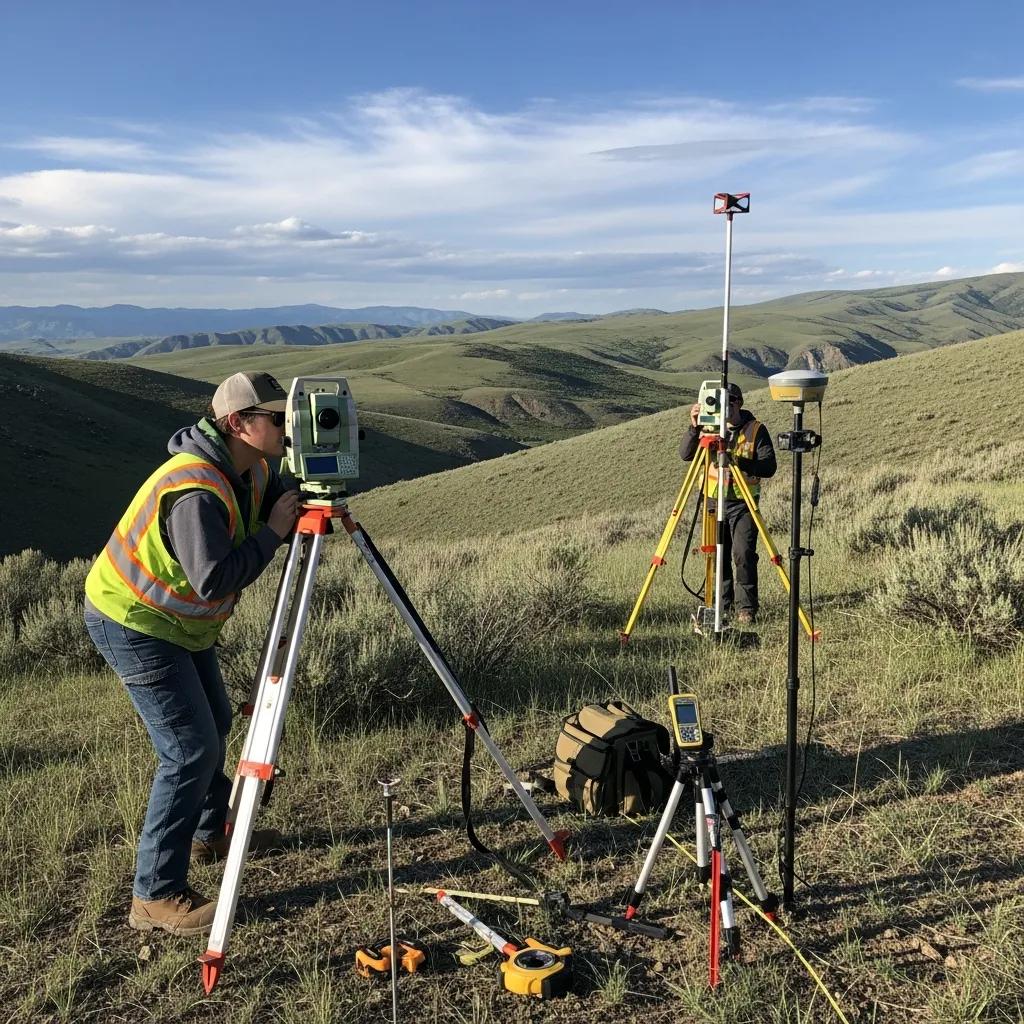
Land Surveyors in Eagle Mountain Utah: Complete Guide to Property Survey Services for Accurate Boundary and Development Solutions
Land surveying in Eagle Mountain, Utah is the technical practice of measuring and mapping property boundaries, elevations, and site features to support clear legal descriptions and reliable development decisions. This guide explains how licensed land surveyors translate field measurements into legal boundary surveys, ALTA/NSPS land title surveys, and topographic maps that protect ownership rights and inform site design. Property owners and developers often face uncertainty about where lines, easements, and contours lie; accurate surveying resolves disputes, enables permitting, and minimizes construction risk. Readers will learn which survey types are essential in Eagle Mountain, typical cost ranges and drivers, the step-by-step surveying process, relevant local regulations, and how surveys support residential and commercial projects. The article also explains modern tools—GPS, UAV/drone surveys, and LiDAR—and how these technologies improve precision and speed. Throughout, keyword-relevant terms such as land surveyors Eagle Mountain Utah, boundary survey Eagle Mountain, and topographic survey Eagle Mountain appear in context to help you find the right service for your project.
Modern surveying technologies, including UAV photogrammetry and LiDAR, are increasingly vital for precise site analysis and optimal building planning.
UAV Photogrammetry & LiDAR for Optimal Building Planning
Accurate land surveys are fundamental for optimal building planning, as topography a Digital Feature Model (DFM) that integrates UAV photogrammetry and LiDAR data to optimize
Land surveying with UAV photogrammetry and LiDAR for optimal building planning, P Sestras, 2025
What Services Do Land Surveyors in Eagle Mountain Utah Provide?

Land surveyors in Eagle Mountain provide a range of surveying services that document property lines, produce topographic maps for design, and stake improvements for construction. These surveying services combine field measurement, historical record research, and mapping to create legal descriptions, plats, and staking layouts that support transactions and development. The outputs vary by survey type but commonly include a sealed map, field notes, monumentation, and a written description usable for recordation or permitting. Below is a concise list of the primary service types and when each is typically used to capture featured-snippet style clarity.
Surveying services commonly provided in Eagle Mountain:
- Boundary Survey: Establishes property line locations and monuments for fences, disputes, and land transfers.
- ALTA/NSPS Land Title Survey: Produces detailed deliverables for commercial transactions and title insurance underwriting.
- Topographic Survey: Maps contours, elevations, and site features for design, drainage, and grading plans.
These service types form the core offerings that support both legal matters and engineering design; the next subsections explain which types are essential and how they differ.
Which Types of Property Surveys Are Essential in Eagle Mountain?
Essential surveys in Eagle Mountain vary by situation but usually include boundary surveys for private owners, ALTA surveys for commercial purchasers, and topographic surveys for site design. A residential fence, home addition, or septic layout commonly requires a property line survey to confirm setbacks and prevent encroachment. Commercial purchases and refinances routinely need ALTA surveys to satisfy lenders and title insurers with a standardized scope. Site planning, subdivision layout, stormwater analysis, and building pad grading rely on topographic surveys that map contours, utilities, and surface features. Understanding which survey fits your objective reduces rework and speeds permitting.
These scenarios highlight the practical use cases: homeowners use boundary surveys for legal clarity and improvements, while developers order ALTA and topo surveys for due diligence and engineering design. The next subsection compares these common survey types side-by-side.
How Do Boundary, ALTA, and Topographic Surveys Differ?
Boundary, ALTA, and topographic surveys differ by scope, standardization, and deliverables: boundary surveys focus on legal corners and monuments, ALTA surveys add title-related certifications and features per lender requirements, and topographic surveys map elevations and site features for design. Boundary surveys typically include deed research, monument recovery or replacement, and a sealed plat showing bearings and distances. ALTA/NSPS surveys follow a national standard and include extra detail such as recorded easements, visible encroachments, and improvements critical for title insurance. Topographic surveys yield contour lines, spot elevations, and utility locations used by civil engineers for grading and drainage. Choosing the right survey depends on whether the priority is legal evidence, title risk mitigation, or design-grade mapping.
The rigorous standards for ALTA/NSPS Land Title Surveys are regularly updated to ensure they meet the evolving needs of commercial real estate transactions and title insurance.
Understanding ALTA/NSPS Land Title Survey Standards
the new 2021 version of the ALTA/NSPS Land Title Survey Minimum Standards. The perform land title surveys may wish to review a redlined version of the 2016 ALTA/NSPS Standards
The Effect of the New 2021 Minimum Standard Detail Requirements for ALTA/NSPS Land Title Surveys on Commercial Real Estate Transactions, 2021
A clear comparison of outputs helps decide which survey to order next; the following section explains typical deliverables and common uses in a compact table.
This comparison clarifies why practitioners select a particular survey based on legal needs, transaction risk, or engineering design; the next major topic addresses cost expectations for these services.
How Much Does a Property Survey Cost in Eagle Mountain Utah?

A reasonable cost range for property surveys in Eagle Mountain depends on the survey type and property complexity, but typical ranges are: boundary surveys from lower-to-mid thousands, ALTA surveys from mid-to-high thousands, and topographic surveys variable by acreage and detail. These ranges reflect differences in field time, research, monumentation, and mapping deliverables. Key factors that influence price include parcel size, terrain, access, the amount of record research required, the need to reset monuments, and whether UAV/LiDAR or GPS rover work is necessary. The table below breaks down survey types by typical turnaround, complexity drivers, and estimated cost ranges to help homeowners and developers set expectations.
Cost comparisons help illustrate why two adjacent jobs can vary significantly in price.
This table summarizes typical timeframes and drivers; the next subsection unpacks specific local factors that most influence cost estimates in Eagle Mountain.
What Factors Influence Land Surveying Costs Locally?
Local cost drivers include property size and shape, topography and vegetation, access conditions on rural lots, the number of monuments to recover or reset, and the amount of title and plat research required. Steep slopes and dense brush increase field time and may require UAV or LiDAR equipment, which raises cost but improves accuracy. Rural parcels can require more travel and boundary research when historical monuments are missing, so expect higher fees for extensive record retrieval. Urban infill lots with complex easements, utilities, and improvements often require detailed ALTA work and coordination with title agents. These factors interact: for example, larger acreage with significant slope plus missing monuments multiplies time and cost.
Understanding these drivers reduces surprises; the following subsection explains how to prepare to get an accurate quote from local surveyors and invites you to request a formal estimate from a qualified firm.
How Can You Get an Accurate Quote from Eagle Mountain Surveyors?
To receive a precise estimate, gather the property address or legal description, recent deed or title commitment, project purpose (sale, construction, subdivision), approximate acreage, and any schedule constraints before contacting a surveyor. Clear communication about whether the survey must meet ALTA/NSPS standards, include monumentation, or provide construction staking helps firms scope necessary research and field work. Quotes may be structured as flat fees, per-acre components, or itemized tasks; ask for a written scope with turnaround times and a sample deliverable. Typical response times for an initial estimate range from one to five business days depending on workload and complexity.
If you want an on-site estimate or formal quote, contact Ludlow Engineers and Associates to request a written proposal or on-site evaluation; their team can provide a scoped estimate after reviewing the deed and property specifics. Preparing the documents above streamlines the quoting process and reduces follow-up.
Eagle Mountain Land Surveying: Boundary, ALTA & Topographic Services
Ludlow Engineers and Associates offers integrated civil engineering and land surveying services with in-house professional land surveyors and engineers, providing precision and continuity from survey through site development. Their capabilities include boundary surveys, ALTA/NSPS surveys, topographic mapping, and development site plans that align survey deliverables with engineering requirements. Operating in Utah with experience serving rural and larger projects, the firm emphasizes reliable mapping, clear legal descriptions, and practical deliverables that support permitting and construction. Choosing a provider with both surveying and civil engineering expertise reduces coordination delays and helps translate survey outputs directly into design work.
- Integrated Services: Survey and civil engineering in the same practice streamlines project handoffs.
- Local Project Experience: Familiarity with rural Utah conditions and county submittal practices.
- Professional Staff: In-house licensed land surveyors and engineers ensure consistent deliverables.
These strengths make Ludlow well-suited for projects that demand coordinated survey and engineering solutions; the next subsections detail relevant experience and quality controls.
What Experience and Expertise Does Ludlow Bring to Eagle Mountain?
Ludlow Engineers and Associates brings decades of practice in civil engineering and land surveying, handling development plans, small water and sewer projects, and a variety of surveying assignments such as boundary, ALTA, and topographic surveys. With in-house professional engineers and land surveyors, the firm can prepare site plans and grading designs using survey data without intervening coordination gaps. Their experience working on rural Utah projects and larger developments helps anticipate permitting needs and common field challenges, reducing rework. This blend of surveying and engineering expertise is particularly valuable when survey results feed directly into subdivision layout or utility design.
This operational continuity supports faster project timelines and clearer communication with local authorities; next we describe how Ludlow ensures precision and client satisfaction.
How Does Ludlow Ensure Precision and Client Satisfaction?
Ludlow maintains precision through contemporary field methods—GPS control, total station measurements, and where appropriate UAV/drone data—and internal QA processes that include peer review of plats and cross-checking field notes against historical records. Deliverables are formatted to meet local submittal standards and include sealed maps and legal descriptions required for recordation. Client communication practices emphasize an initial scoping meeting, clear written proposals, and a review cycle for draft deliverables so issues are caught early. This combination of technology, procedural checks, and responsive communication helps ensure that final land surveys meet legal, title, and engineering needs.
For readers ready to move forward, contact Ludlow Engineers and Associates to request an estimate or schedule an on-site evaluation tailored to your property and project scope.
What Is the Land Surveying Process with Eagle Mountain Professionals?
The land surveying process with Eagle Mountain professionals follows a predictable sequence: initial inquiry and document gathering, title and records research, field control and data collection, drafting and QA, client review, and final deliverables with monumentation or recordation as required. This phased approach clarifies client touchpoints and reduces uncertainty about timing and responsibilities. Modern survey workflows combine office research with targeted field operations, and technology such as GPS and UAVs speeds data collection and improves accuracy. The numbered steps below present the typical process in a concise format useful for planning.
Survey process steps that professionals use to deliver an accurate, usable survey:
- Inquiry & Scope: Client provides purpose, deed/title info, and schedule; surveyor scopes work.
- Research & Permitting: Title commitments, plats, and recorded easements are reviewed.
- Field Control & Data Collection: GPS control, total station, and UAV/photogrammetry gather measurements.
- Drafting & QA: Plat preparation, peer review, and corrections produce draft deliverables.
- Client Review & Revisions: Client examines drafts; adjustments are made as needed.
- Final Deliverables & Monumentation: Sealed maps, descriptions, stakes, and recordation are completed.
These steps form a predictable timeline; the table below shows typical phases, actions, and deliverable timeframes for planning purposes.
This phased plan helps clients anticipate timelines and required inputs; the next subsection explains how modern technologies improve accuracy and efficiency.
What Are the Key Steps from Initial Inquiry to Final Survey Report?
The key steps begin with a clear inquiry where the client defines purpose and provides available documents, followed by title and plat research to establish the legal baseline. Fieldwork establishes horizontal and vertical control using GPS, total station, and sometimes UAV imagery, which is then processed into coordinate-accurate maps. Draft deliverables undergo QA and client review to ensure the map reflects the intended scope, after which final signatures, monumentation, and recordation complete the service. Typical turnaround depends on scope but following this sequence prevents delays and clarifies when clients must supply information or approvals.
These procedural steps reduce surprises and improve permitting outcomes; next we highlight the role of UAV and LiDAR technologies in local surveying.
How Do Modern Technologies Like Drone Surveying Enhance Accuracy?
Drone surveying and LiDAR enhance accuracy by rapidly collecting high-resolution aerial imagery and dense elevation points over large areas, reducing field hours and improving contour detail for design. UAV photogrammetry produces orthophotos and point clouds useful for mapping surface features, while LiDAR penetrates vegetation to capture ground points on wooded or brushy lots. These technologies are particularly valuable on steep or inaccessible parcels common in rural Utah, enabling safer data collection and finer contour intervals than traditional methods alone. When combined with GPS control and ground checks, UAV and LiDAR deliver reliable datasets that accelerate design and permitting. For more information on UAV aerial surveying, check our resources.
Studies consistently demonstrate the high horizontal and vertical accuracy of UAV-LiDAR data, even across diverse vegetation types and challenging terrains.
UAV-LiDAR Accuracy for Topographic Surveys in Varied Terrain
This study assessed the horizontal and vertical accuracy of UAV-LiDAR data, and addressed whether the vertical errors varied among six vegetation types (coniferous trees, deciduous)
UAV–LiDAR accuracy in vegetated terrain, M Kucharczyk, 2018
Leveraging these technologies saves time and reduces uncertainty; understanding regulations and permit considerations is the next critical step for property owners.
What Local Regulations and Permits Affect Property Surveys in Eagle Mountain?
Local regulations affecting surveys include zoning setbacks, minimum lot standards, recorded easements, right-of-way encroachments, and recording requirements for plats and legal descriptions. Surveyors must consider city and county land-use rules that govern building placement, lot coverage, and conservation overlays when preparing survey deliverables for permitting. Additionally, recorded easements and utility corridors must be identified and depicted accurately because they constrain use even when not visible on the ground. Below is a concise checklist of typical permit and regulatory items property owners should verify before ordering a survey.
Surveyors help ensure compliance by documenting constraints and formatting deliverables for submittal.
- Setbacks and Lot Coverage: Verify required distances from property lines for structures.
- Recorded Easements: Identify and map easements affecting access and utilities.
- Right-of-Way and ROW Encroachments: Check for road or trail easements that impact use.
This checklist helps owners prepare for permitting; the following subsection explains how surveyors operationalize compliance in practice.
Which Zoning and Land Use Rules Should Property Owners Know?
Property owners should know setback requirements, permitted land uses, maximum lot coverage, and any overlay districts that affect buildable area and stormwater management. Setbacks determine how close a structure may be to a property line and often drive the need for a certified boundary survey before plan submittal. Easement locations—public or private—create legal restrictions on building and require precise depiction on plats. Owners should consult planning and zoning offices for up-to-date regulations and present surveyors with the relevant codes so deliverables are formatted to meet application requirements.
Knowing these rules in advance reduces redesigns during permitting; next we cover how surveyors ensure deliverables meet local submission standards.
How Do Surveyors Ensure Compliance with Eagle Mountain Requirements?
Surveyors ensure compliance by performing pre-permit research, confirming applicable zoning codes, depicting required data (setbacks, easements, contours) on plats, and preparing deliverables in the format required for local submittal. They coordinate with planning departments when special format or certification language is required and include monumentation and legal descriptions suitable for recordation. When projects need engineering review, survey data is delivered in a way that integrates directly into site plan and grading designs to avoid resubmittal cycles. This workflow reduces approval times and helps clients move from planning to construction more smoothly.
With regulatory considerations addressed, the next section explains how different client types—residential and commercial—benefit from accurate surveying.
How Can Residential and Commercial Clients Benefit from Land Surveying in Eagle Mountain?
Accurate surveying provides homeowners legal clarity to resolve disputes and plan improvements, while commercial clients use surveys to inform site design, secure title insurance, and manage development risk. For residential owners, surveys confirm property corners for fence placement, verify setbacks for additions, and locate utilities for safe excavation. Developers and commercial property owners rely on ALTA surveys, topographic mapping, and construction staking to support transactions, civil design, and phased construction. Below are distinct benefits by client type that illustrate the practical value of investing in professional surveying services.
A focused list clarifies practical benefits for both client categories.
- Residential Benefits: Confirmed boundaries, setback verification, and support for renovations and utility planning.
- Commercial Benefits: Title risk mitigation, precise topo data for engineering, and construction staking to reduce rework.
- Financial & Timeline Benefits: Reduces costly mistakes, speeds permitting, and supports accurate cost estimating.
These benefits translate into lower risk and clearer timelines for property improvements or transfers; the next subsections detail typical residential needs and developer use cases.
What Are the Specific Needs of Residential Property Surveys?
Residential surveys commonly serve fence line verification, setback confirmation for home additions, septic or utility siting, and mortgage or sale transactions that require a certified plat or legal description. Homeowners ordering a boundary survey receive a sealed map showing corner locations, which protects against encroachment disputes and clarifies where improvements may be sited. For additions and remodeling, a recent survey prevents costly corrections by ensuring proposed work complies with setback and zoning rules. When utility or septic work is planned, a topo or site plan with underground and surface features reduces the risk of damaging existing infrastructure.
Providing the right survey at the outset saves time and money during construction and resale; the next subsection explains how commercial surveys support larger projects.
How Do Commercial Land Surveys Support Development in Utah County?
Commercial surveys underpin due diligence, design, and construction for developments, providing ALTA/NSPS surveys for transactions, topographic and utility mapping for engineering, and construction staking during build-out. ALTA surveys help lenders and title insurers evaluate encumbrances, easements, and improvements that affect property value and marketability. Topographic and utility surveys enable civil engineers to design grading, drainage, and infrastructure while accurate construction staking translates plans into field layout that minimizes costly layout errors. Collaboration between surveyors and civil engineers accelerates permitting and keeps projects on schedule.
Developers benefit from integrated survey and engineering workflows that connect mapping directly to design and permitting requirements. For projects or estimates, contact Ludlow Engineers and Associates to request a scoped proposal or on-site estimate tailored to your property and development needs.