Buying or selling property
Confirm exactly what you're buying before closing. Title companies and lenders often ask for one, especially on acreage and older lots.

A licensed Utah surveyor researches the record, recovers or sets your corners, and delivers a stamped map that's filed with the county. Boundary surveys from $1,025, quoted as a fixed fee before we start.
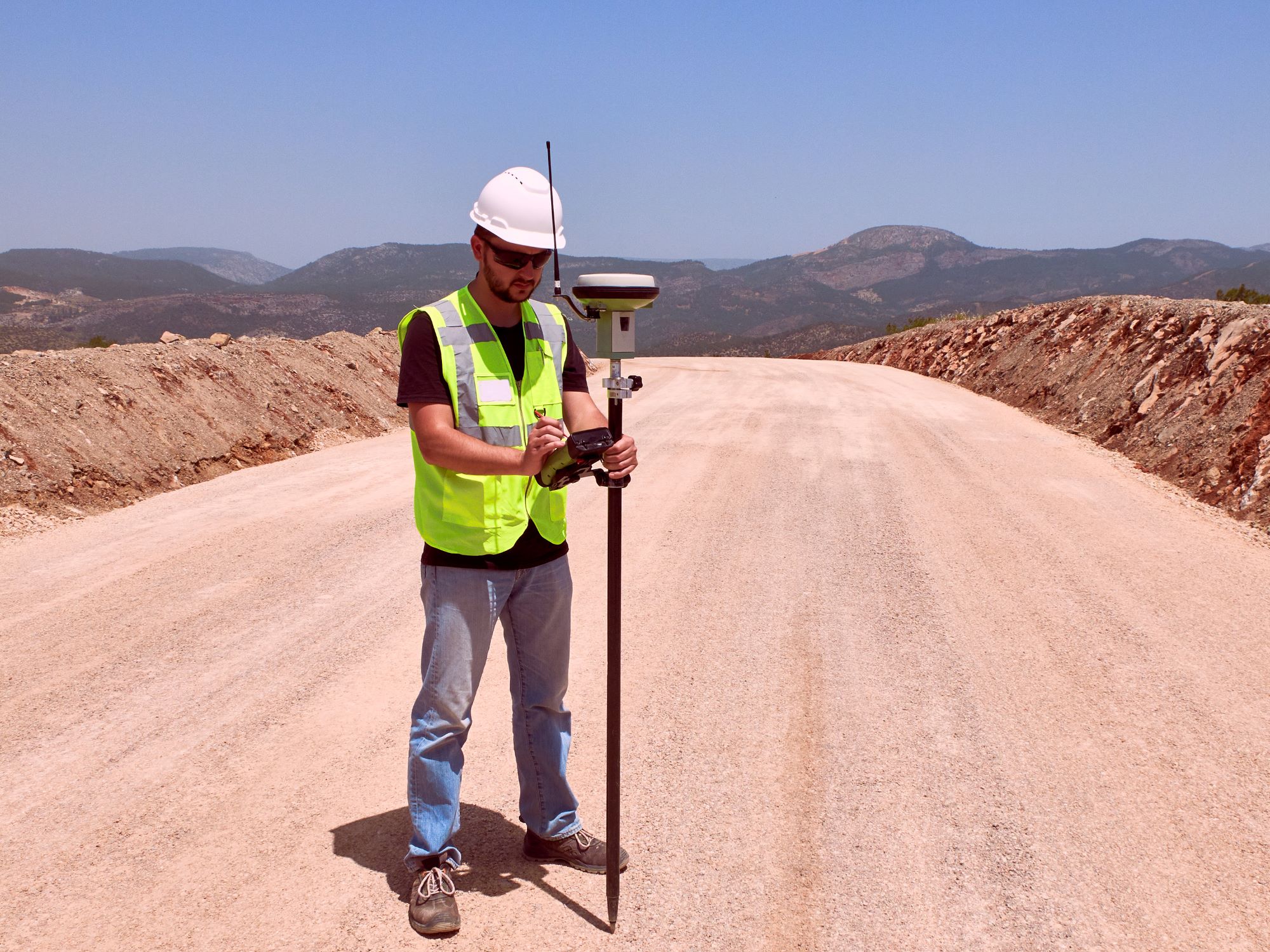
A boundary survey (often called a property line survey) is a licensed surveyor's determination of where a parcel's legal lines and corners sit on the ground. The surveyor researches your deed, the adjoining deeds, plats and prior surveys, recovers the monuments that exist, measures the parcel, and resolves the record against the evidence. Missing corners are set, and you get a stamped map, not an estimate.
A county parcel map or a line judged from an old fence isn't a legal boundary. In Utah only a licensed Professional Land Surveyor can certify one, and the map is filed with the county.
If you're about to buy, build, fence, split or settle a question about a line, the survey comes first.
Confirm exactly what you're buying before closing. Title companies and lenders often ask for one, especially on acreage and older lots.
Know the improvement is inside your lines and meets setbacks before the concrete is poured.
Corners that were never set, were pulled up, or can't be found are recovered or re-established and marked.
A stamped survey establishes the legal line early, before a disagreement becomes expensive.
The boundary is the starting point for a lot split, a lot-line adjustment or a subdivision plat.
Many Utah cities and counties want a current survey before they review a permit, and it may reveal encroachments that already exist.
People use several names for the same survey. Here's how they line up.
| What you might call it | What it is | Who usually asks for it |
|---|---|---|
| Property line survey / lot survey | Everyday names for a boundary survey of a home or lot. | Homeowners, buyers, fence and garage projects. |
| Boundary survey | The licensed survey that locates, marks and maps the property lines and corners, and is filed with the county. | Owners, title companies, attorneys, cities. |
| ALTA/NSPS survey | A commercial title survey to a national standard, with Table A items and lender certifications. | Commercial lenders and title insurers. See ALTA surveys. |
| Topographic survey | Elevations, contours and site features for design. Often paired with a boundary survey. | Architects, engineers, builders. See topographic surveys. |
Six steps from your call to a filed survey. A straightforward platted lot is often finished in about two weeks.
Your deed, the adjoining deeds, the recorded plat and prior surveys and corner records from the county.
We analyze the description against the Public Land Survey System and tie the work to a known control framework.
The crew searches for pins, pipes, section corners, fences and walls, and measures the evidence along every line.
The surveyor reconciles the record with what was found on the ground and decides where each line and corner legally sits.
Missing corners are set with monuments marked with the surveyor's license number, and the map and legal description are drafted.
A Utah PLS reviews and stamps the survey; you receive the map, description and digital files, and the map is filed with the county surveyor.
Rural metes-and-bounds acreage in Juab, Sanpete, Millard and Sevier counties often traces to old deeds, fence lines and section corners, and needs records research and field evidence, not just GPS. More: how long a survey takes.
Every Ludlow boundary survey includes the following.
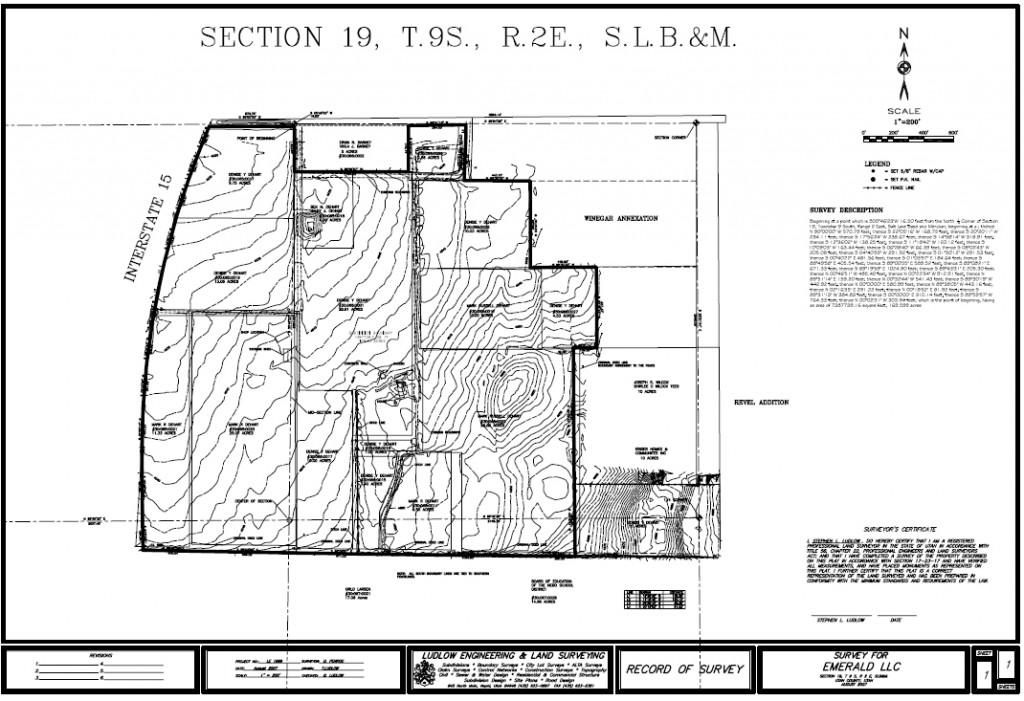
Planning ranges for typical parcels. Every job is quoted as a fixed fee in writing, with travel outside our core counties shown as its own line.
| Parcel | Typical cost | What drives it |
|---|---|---|
| Recorded subdivision lot | $1,025–$1,800 | A recorded plat and nearby monuments keep research and fieldwork efficient. |
| Older town lot | $1,800–$2,500+ | Pioneer townsite plats, old deeds and fences off the record line. |
| 1–5 acres | $2,000–$4,000 | Longer lines, more corners, more county research. |
| 5–20 acres | $3,500–$6,500 | Section-corner recovery, terrain and access. |
| 20+ acres or ranch land | $5,000+ | Size, number of corners and distance between section corners. |
| Boundary + topographic survey | Quoted together | One visit is usually cheaper than ordering the topo later. |
| Disputed or lost-corner work | Quote-based | Conflicting records, missing monuments or litigation need more analysis. |
Compare all survey types: Utah survey cost guide.
Our tracked records alone hold 1,729 boundary surveys since 2000, and 1,241 survey maps filed with Utah counties. A few recent jobs show the range.
Nephi's original townsite blocks were platted generations before modern equipment. On lots like these the deeds, the plat and the fences rarely agree exactly, so the answer comes from weighing old records against the monuments we can still find.
Rural Sanpete parcels are described from section corners. The work starts with recovering those corners, then measuring along fence lines that may have stood for a century.
Lots on a recorded subdivision plat are usually the fastest and least expensive boundary surveys, when the original pins are still in the ground. Often they are, just buried.
A split starts with the parent parcel's boundary. Getting it right first means the new descriptions close, the county approves the split, and the next survey agrees with ours.
Nephi, Manti, Mount Pleasant and Ephraim were laid out as townsites with large blocks. We've surveyed 269 boundaries in Nephi and 134 in Mount Pleasant; on those old lots, fences a few feet off the record line are normal.
Around Eureka and the Tintic district, where we've done 100 boundary surveys, parcels are patented mining claims described by mineral survey, not sections. They take specific research. See Eureka land surveying.
In the towns where we've worked most, corners and maps from earlier jobs shorten the search on yours. It's one reason local experience lowers the price.
On recorded subdivisions, original corners are frequently in place, just buried under landscaping or gravel. Finding them is faster and cheaper than re-establishing them.
What Utah law requires of a boundary survey.
A line in the wrong place leads to neighbor disputes, a garage or fence built over the line, tear-out and rebuild, legal fees, or a smaller parcel than you paid for, and it can cloud the title when you sell.
Fieldwork happens year-round, but the season affects how fast corners can be found.
Doable, with caveats. Snow and frozen ground can hide monuments, especially on rural parcels.
Book early. Demand climbs as building season starts.
Best conditions and longest days, and the busiest months. Allow lead time.
A strong window, especially for acreage, as vegetation dies back before the snow.
You can attach documents right on our quote form.
Our office is at 1451 S. Main in Nephi, in the center of the state. Most of our boundary work is in the counties below, and we travel statewide.
County and city pages: Juab County · Nephi · Sanpete County · Utah County · Payson · Millard County · Sevier County · Wasatch County · Salt Lake City · Eureka
A recorded subdivision lot typically runs $1,025 to $1,800, and an older town lot $1,800 to $2,500 or more. Parcels of 1 to 5 acres usually run $2,000 to $4,000, 5 to 20 acres $3,500 to $6,500, and larger tracts $5,000 and up. Every Ludlow survey is a fixed fee in writing before work starts.
Most residential boundary surveys are finished in one to three weeks from approval. Rural parcels with heavy research, missing corners or snow cover take longer. Tell us your deadline when you order.
Yes. "Property line survey," "property survey" and "lot survey" are everyday names for a boundary survey: the licensed survey that locates and marks your property lines and corners.
A boundary survey locates the lines and corners. An ALTA/NSPS survey is a commercial title survey to a national standard, with Table A items and certifications for lenders and title insurers. Most residential needs call for a boundary survey.
Yes. Only a Professional Land Surveyor licensed in Utah can locate and certify a boundary, and the map must be filed with the county surveyor. A county parcel map or an old fence is not a legal boundary.
Yes. We research the record, tie to section corners and prior surveys, measure the evidence in the field, and re-establish the corner with a monument marked with the surveyor's license number.
A survey establishes where the record line is and where fences and buildings sit relative to it, which resolves most disagreements early. If a fence has stood in the wrong place for many years, talk to a real estate attorney about your rights.
Yes. Utah law requires the surveyor to file a map with the county surveyor within 90 days of establishing or re-establishing a boundary (Utah Code § 17-73-504), so it becomes a public record.
We're in Nephi, in the center of Utah, and survey statewide. Most of our boundary work is in Juab, Sanpete, Utah, Millard and Sevier counties, and we regularly travel to the Wasatch Front and beyond, with travel shown as its own line on the quote.
Keep reading: boundary surveys explained · what a land survey is · property-line adjustments · our project record
Send the address or parcel number and what you're planning. We'll confirm the scope, send a fixed fee and give you the next field date, usually within one business day.
Ludlow Engineering has surveyed and engineered Utah property for 51 years. Every survey and plan is prepared under a licensed professional, not handed off.
Professional Land SurveyorState of Utah No. 5331527
Directs our boundary, topographic, ALTA and subdivision surveys.
Professional EngineerState of Utah
Stamps our site plans, foundation designs and civil engineering.
Partner & Managing MemberMBA
Managing Member of Ludlow Engineers and Associates
1,729 boundary survey projects since 2000, in 10 Utah counties.
Most recent: Oct 2026.
Counts come from Ludlow Engineering's project records (2000–present, updated Oct 2026). Client names are never shown.