Land Survey Costs Explained: Fees, Estimates & Pricing Factors
Understanding the cost to survey land is a fundamental requirement for property owners, developers, and real estate professionals. Land surveying establishes legal boundaries, documents topography, and identifies site features that materially affect property value and development feasibility. This guide examines the factors that drive surveying fees, presents average costs by survey type, and explains the use of cost estimation tools, enabling informed procurement decisions when engaging a licensed surveyor.
This article presents average land surveying prices for 2024, analyzes cost drivers, outlines the standard survey workflow, and provides criteria for selecting a qualified surveyor. It also summarizes legal and regulatory considerations that can affect final pricing.
What Are the Average Prices for Land Surveying Services in 2024?
Average prices for land surveying in 2024 vary by survey type, geographic market, and site complexity. Typical fees for standard surveys range from $400 to $1,000; more complex assignments incur higher charges commensurate with scope and risk.
How Does Land Survey Cost Vary by Survey Type?
Survey type directly affects scope of work and cost. Boundary surveys, which define legal property lines, commonly range from $400 to $900. Topographic surveys, which record contours and physical features, typically range from $500 to $1,500. Site conditions and existing improvements increase data collection and processing effort, and therefore cost.
What Is the Typical Price Range for Property Boundary Surveys?
Property boundary surveys generally cost between $400 and $900, subject to parcel size and local market rates. Additional charges may apply when extensive record research, monument recovery, or complex boundary resolutions are required. land and property survey costs.
Which Factors Influence the Cost to Survey Land?

Multiple variables determine surveying cost. Key determinants include acreage, terrain complexity, legal research requirements, access logistics, and the level of deliverable detail required by the client or regulatory authority.
How Do Acreage Size and Land Complexity Affect Surveying Fees?
Acreage size correlates with field time and data processing effort; larger parcels require proportionally more resources. Terrain complexity—such as steep grades, dense vegetation, or water features—raises fieldwork difficulty and safety considerations, increasing labor hours and overall fees.
What Role Do Technology and Equipment Play in Survey Costs?
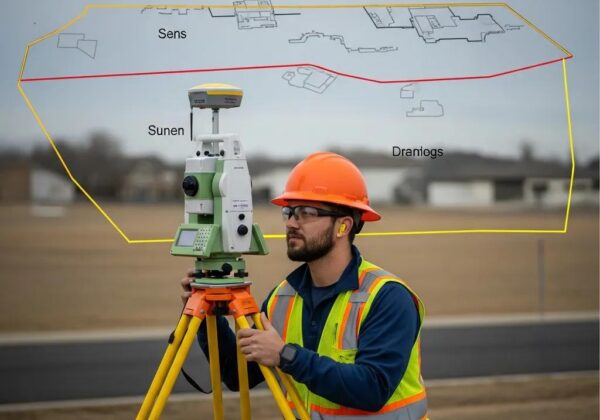
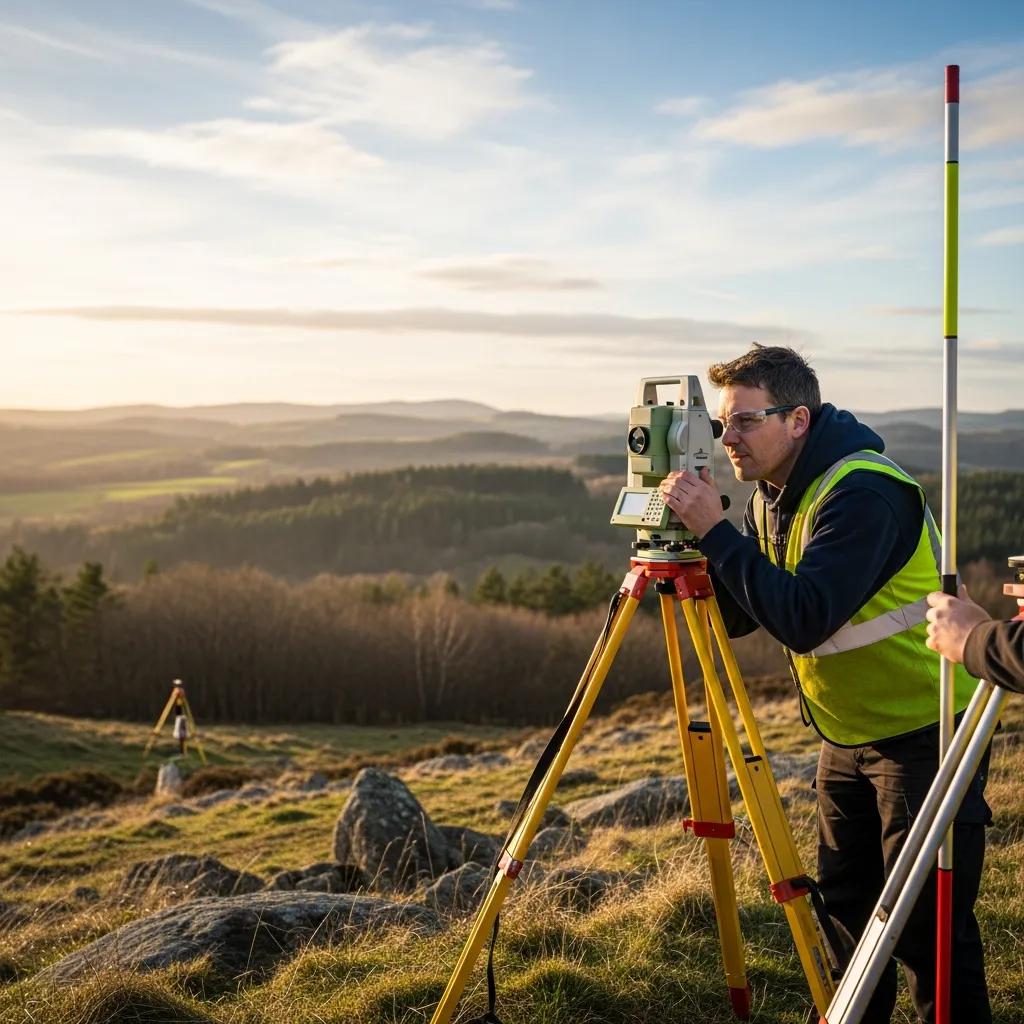
Equipment and technology influence unit costs and productivity. Tools such as GNSS/GPS receivers and unmanned aerial systems (UAS) can improve positional accuracy and reduce field time, while initial capital and maintenance costs for advanced systems contribute to service rates. Firms charging higher fees often deploy advanced instrumentation to deliver greater precision and faster turnaround.
Further research compares the operational efficiency and cost-effectiveness of advanced surveying instruments across different field conditions and workflows.
Advanced Surveying Tools: Cost & Time Efficiency Comparison
Contemporary advanced surveying instruments exhibit variable performance by location and specification, with accuracy, time, and cost as primary metrics. Comparative assessment indicates that a drone typically requires less field time than DGPS and TS, while DGPS demonstrates approximately double the cost expenditure relative to the other two instruments.
Operational Efficiency of Advanced Surveying Tools: A Case Study, SV Shah, 2025
How to Use a Land Survey Cost Estimator Effectively?
A land survey cost estimator provides a preliminary budget projection based on defined inputs. Use estimators to scope potential expenses and to compare proposals, recognizing that estimates require validation through site inspection and formal quotes.
What Inputs Are Required for Accurate Land Survey Cost Estimation?
Accurate estimates depend on precise inputs: parcel area, requested survey type, boundary complexity, access constraints, and any required deliverables (for example, CAD files or certified plats). Providing these specifics produces a realistic cost projection for budgeting.
How Can Interactive Calculators Improve Pricing Transparency?
Interactive calculators increase transparency by permitting clients to specify project parameters and receive tailored estimates. Such tools clarify the cost components and assist decision-makers in comparing scope versus price prior to procurement.
What Is the Land Survey Process and Its Impact on Pricing?
The land survey process comprises defined phases that collectively determine resource allocation and cost. Each phase requires certified expertise and contributes to the final fee.
What Are the Key Steps in Conducting a Land Survey?

- Initial Consultation: Discussing the project requirements with the surveyor.
- Research: Gathering existing property records and legal documents.
- Fieldwork: Measuring and mapping the land using specialized equipment.
- Report Preparation: Compiling findings into a detailed report.
Each phase requires allocated time, technical skill, and quality control, all of which contribute to the total project cost.
How Does Survey Duration Influence Overall Fees?
Survey duration affects labor and equipment allocation. Extended fieldwork or delayed access due to weather, permits, or terrain constraints increases direct labor hours and associated charges reflected in the final invoice.
How to Choose a Qualified Land Surveyor to Optimize Cost and Quality?
Selecting a qualified surveyor reduces project risk and supports cost-effective outcomes. Procurement should emphasize licensure, technical competence, and demonstrable experience relevant to the project scope.
What Credentials and Experience Should You Look For in a Surveyor?
Evaluate licensure status, professional affiliations, and a documented portfolio of similar projects. Verify specialized certifications and demonstrated experience with the required survey type and local jurisdictional procedures.
How Do Client Testimonials and Case Studies Reflect Surveyor Reliability?
Client testimonials and case studies provide objective evidence of delivery performance, schedule adherence, and cost control. Use these materials to corroborate the surveyor’s claims regarding accuracy and project execution.
Ludlow Engineers and Associates provides professional land surveying services designed to deliver accurate, verifiable results. The firm’s surveyors employ current technology and established methodologies to produce precise, timely deliverables.
What Legal and Regulatory Considerations Affect Land Survey Costs?
Legal and regulatory requirements frequently alter scope and cost. Compliance obligations, certification standards, and jurisdictional reporting formats can necessitate additional research, documentation, or specific survey methodologies.
How Do Local Regulations Influence Surveying Requirements and Pricing?
Local ordinances and agency standards can mandate specific deliverables, control point requirements, or submittal formats, which increase effort and cost. Project planners should review applicable local regulations during the procurement phase to anticipate these impacts.
When Is a Land Survey Legally Required for Property Transactions?
Land surveys are commonly required for real estate transactions, financing, boundary dispute resolution, and certain permitting processes. Identifying statutory or lender-imposed survey requirements early mitigates transactional risk and potential delay.
Multiple cost drivers influence total surveying expense. A clear understanding of average prices, site-specific factors, and professional qualifications enables property owners to evaluate proposals and select an appropriate surveying provider.
The table summarizes typical cost ranges for common survey types and the primary factors that affect pricing. Use these benchmarks to inform budget planning and vendor selection.
Land surveying provides foundational data that materially affects property valuation and development decisions. Understanding cost components and selecting qualified practitioners ensures that surveying deliverables meet legal and project requirements.
Frequently Asked Questions
What is the difference between a boundary survey and a topographic survey?
A boundary survey determines the legal parcel limits and corner monuments to establish property ownership and resolve encroachments. A topographic survey records terrain elevations, natural features, and constructed elements to support design and grading work. Both survey types serve distinct technical objectives and are often combined for comprehensive site analysis.
How can I prepare for a land survey to minimize costs?
To reduce costs, assemble existing documentation (previous surveys, deeds, legal descriptions) before engagement; provide clear access and remove obstructions where feasible; and define deliverable requirements during the initial consultation to limit scope creep.
Are there any hidden costs associated with land surveying?
Hidden costs can include title research fees, permit charges, extended field time for difficult terrain, and specialized instrumentation. Identify potential additional charges during contract negotiation and require an itemized scope of work to limit unforeseen expenses.
How long does a typical land survey take to complete?
Survey duration varies with parcel size, survey type, site conditions, and research requirements. A standard boundary survey may be completed in hours to a few days; complex topographic or ALTA surveys can require additional days or weeks depending on fieldwork and record research.
What should I do if I disagree with the results of a land survey?
If results are disputed, first request a methodological explanation from the performing surveyor. If the issue remains unresolved, obtain a peer review or engage an independent licensed surveyor for a second opinion. Legal recourse may be necessary in some instances; consult a real estate attorney when appropriate.
Can I perform my own land survey?
Informal, non-certified measurements can be performed by property owners, but official surveys require specialized training, licensed professionals, and calibrated equipment to meet legal and regulatory standards. For conveyancing, permitting, or dispute resolution, retain a licensed surveyor.
Conclusion
Understanding land survey costs enables property owners to make informed investment and procurement decisions. Assessing scope, site factors, regulatory requirements, and surveyor qualifications supports accurate budgeting and delivery of required survey products. Utilize estimation tools and consult qualified professionals to align cost expectations with project objectives.